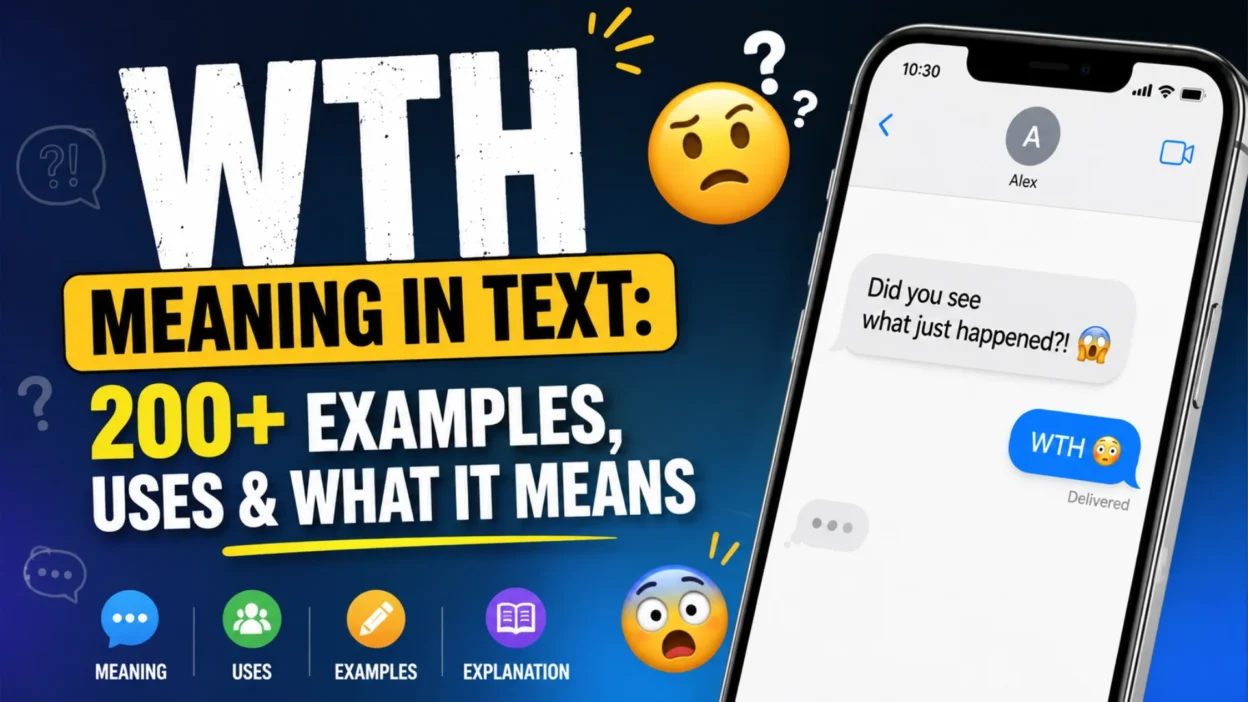
If someone texts “WTH?”, you may wonder what they mean. The WTH meaning in text is usually “What the hell?” It can also mean “What the heck?” The softer meaning depends on the conversation.
WTH is a common texting abbreviation. People use it in casual chats, social media, gaming, and group messages. It helps them express a quick reaction.
The abbreviation can show surprise, confusion, disbelief, or frustration. It can also sound playful. Therefore, always consider the context before judging the tone.
What Does WTH Mean in Text?
WTH usually means “What the hell?” in text messages. Some people use it as a shorter form of “What the heck?”
For example:
“WTH just happened?”
The sender may mean:
“What the hell just happened?”
They could also mean:
“What the heck just happened?”
Both versions show a strong reaction. However, the tone can change with the situation.
Quick WTH Meaning
| Text | Common Meaning | Tone |
|---|---|---|
| WTH | What the hell? | Casual |
| WTH | What the heck? | Softer |
| WTH? | What happened? | Confused |
| WTH! | That’s unexpected | Shocked |
| WTH 😂 | That’s surprising | Playful |
| WTH bro? | What’s going on? | Casual |
| WTH happened? | Asking for an explanation | Curious |
| WTH is this? | Confusion or surprise | Depends on context |
What Does WTH Stand For?
WTH has three letters.
- W means “What.”
- T means “The.”
- H means “Hell.”
So, the most common expansion is “What the hell?”
However, some people use WTH for “What the heck?” This version sounds less harsh. As a result, the same abbreviation can work in different casual chats.
For example, a friend might write:
“WTH 😂”
That message may sound funny or surprised.
A different message can sound more serious:
“WTH were you thinking?”
Here, the sender may sound annoyed. Therefore, the words around WTH matter.
How WTH Can Change Tone
WTH does not have one fixed emotional tone. The same abbreviation can express several reactions.
Surprise
People often use WTH after something unexpected happens.
- “WTH, you got here already?”
- “WTH! You actually won?”
- “WTH, that was fast.”
- “WTH, you finished everything?”
- “WTH, when did this happen?”
- “WTH, you bought a new phone?”
- “WTH, that’s your new car?”
- “WTH, you remembered my birthday?”
- “WTH, you really did it?”
- “WTH, everyone is here already?”
Confusion
WTH can also show that someone needs an explanation.
- “WTH is happening?”
- “WTH does this mean?”
- “WTH are they talking about?”
- “WTH is this supposed to be?”
- “WTH happened to the plan?”
- “WTH am I looking at?”
- “WTH is going on?”
- “WTH did I just read?”
- “WTH are you saying?”
- “WTH is wrong with this app?”
Disbelief
Someone may use WTH when something seems hard to believe.
- “WTH, you actually said that?”
- “WTH, he really left?”
- “WTH, they canceled it?”
- “WTH, you paid that much?”
- “WTH, she already finished?”
- “WTH, that’s the final score?”
- “WTH, you watched the whole season?”
- “WTH, they sold out already?”
- “WTH, this really happened?”
- “WTH, you believed him?”
Mild Frustration
WTH can show annoyance without being a direct insult.
- “WTH, my Wi-Fi stopped again.”
- “WTH, why is this taking so long?”
- “WTH, my phone froze.”
- “WTH, where did my file go?”
- “WTH, the app crashed again.”
- “WTH, why didn’t you tell me?”
- “WTH, the meeting moved again.”
- “WTH, this isn’t working.”
- “WTH, why is the order late?”
- “WTH, I just fixed this.”
WTH Examples With Friends
Friends often use WTH in a relaxed way.
- “WTH bro, what happened?”
- “WTH 😂 you look hilarious.”
- “WTH, where are you?”
- “WTH, you missed the best part.”
- “WTH did you send me?”
- “WTH, you stayed up all night?”
- “WTH, you’re still awake?”
- “WTH, that’s your excuse?”
- “WTH 😂 I can’t believe you.”
- “WTH, you really forgot?”
WTH Examples in Gaming Chats
Gaming communities use short reactions all the time. WTH fits naturally into fast conversations.
- “WTH just happened in that match?”
- “WTH, where did my character go?”
- “WTH, that player disappeared.”
- “WTH, how did you survive?”
- “WTH, that was a crazy move.”
- “WTH, my connection dropped.”
- “WTH, we actually won.”
- “WTH, that boss is impossible.”
- “WTH, who took my loot?”
- “WTH, that shot was insane.”
WTH Examples on Social Media
Social media users often use WTH as a quick reaction.
- “WTH did I just watch?”
- “WTH is this video?”
- “WTH 😂 this comment section.”
- “WTH, this trend is everywhere.”
- “WTH, people actually do this?”
- “WTH, this photo is wild.”
- “WTH happened in the comments?”
- “WTH, this meme is hilarious.”
- “WTH, why is this trending?”
- “WTH, I wasn’t expecting that.”
WTH Examples for TikTok and Short Videos
Short videos often create quick reactions. WTH can express surprise or confusion.
- “WTH did I just see?”
- “WTH 😂 that ending.”
- “WTH, the plot twist!”
- “WTH, how did that happen?”
- “WTH, this video changed quickly.”
- “WTH, that’s actually impressive.”
- “WTH, why did he do that?”
- “WTH, I watched this twice.”
- “WTH, that transition was crazy.”
- “WTH, what was that?”
WTH Examples in Family Chats
The abbreviation can appear in informal family conversations too.
- “WTH, who ate the cake?”
- “WTH, who’s coming tonight?”
- “WTH happened to dinner?”
- “WTH, why is everyone awake?”
- “WTH, where did the keys go?”
- “WTH, who moved my stuff?”
- “WTH, are we leaving now?”
- “WTH, why is the TV on?”
- “WTH, who ordered all this food?”
- “WTH, when did you get home?”
WTH Examples in School Chats
Students may use WTH when discussing homework, tests, or class updates.
- “WTH is this homework?”
- “WTH, the test is tomorrow?”
- “WTH did the teacher say?”
- “WTH, I missed the announcement.”
- “WTH, we have another assignment?”
- “WTH, when is the deadline?”
- “WTH, did you finish the project?”
- “WTH, that question was hard.”
- “WTH, why was class canceled?”
- “WTH, I forgot about the quiz.”
WTH Examples in College Chats
College students also use the abbreviation in casual group chats.
- “WTH, the lecture starts now?”
- “WTH, where is everyone?”
- “WTH, did the professor change it?”
- “WTH is this assignment asking?”
- “WTH, the exam is next week?”
- “WTH, I missed the email.”
- “WTH, that’s our final topic?”
- “WTH, how long is the presentation?”
- “WTH, did you submit it?”
- “WTH, we have class today?”
WTH Examples in Work Chats
WTH is less suitable for formal work messages. Still, coworkers may use it in informal team chats.
- “WTH, is the meeting still happening?”
- “WTH, who changed the file?”
- “WTH happened to the schedule?”
- “WTH, the deadline moved?”
- “WTH is this spreadsheet showing?”
- “WTH, did the client reply?”
- “WTH, the system is down.”
- “WTH happened to the report?”
- “WTH, are we starting early?”
- “WTH, I didn’t receive the update.”
WTH Examples for Dating and Relationships
The abbreviation can also appear in casual relationship conversations.
- “WTH, why didn’t you tell me?”
- “WTH, you’re already here?”
- “WTH happened last night?”
- “WTH, you remembered that?”
- “WTH, are you serious?”
- “WTH, you actually called?”
- “WTH, why are you laughing?”
- “WTH, where did you disappear?”
- “WTH, you look amazing.”
- “WTH, I wasn’t expecting that.”
WTH Examples for Funny Situations
An emoji can make WTH sound much more playful.
- “WTH 😂 what was that?”
- “WTH 😂 you actually did that.”
- “WTH, this is too funny.”
- “WTH 😂 I can’t stop laughing.”
- “WTH, who taught you that?”
- “WTH 😂 that’s your plan?”
- “WTH, why does this look funny?”
- “WTH 😂 what am I seeing?”
- “WTH, this makes no sense.”
- “WTH 😂 that timing was perfect.”
WTH Examples for Shock
An exclamation mark can make the reaction sound stronger.
- “WTH! That’s unbelievable.”
- “WTH! Did you see that?”
- “WTH! What just happened?”
- “WTH! That’s huge.”
- “WTH! I wasn’t ready for that.”
- “WTH! How did that happen?”
- “WTH! That’s completely unexpected.”
- “WTH! He actually did it.”
- “WTH! What a surprise.”
- “WTH! I can’t believe this.”
WTH Examples for Asking What Happened
WTH can introduce a direct question about an event.
- “WTH happened here?”
- “WTH happened to your phone?”
- “WTH happened last night?”
- “WTH happened to the game?”
- “WTH happened to the meeting?”
- “WTH happened with the order?”
- “WTH happened to everyone?”
- “WTH happened after I left?”
- “WTH happened to your account?”
- “WTH happened to the plan?”
Short WTH Reactions
Sometimes people use WTH by itself. The tone then depends heavily on the conversation.
- “WTH?”
- “WTH!”
- “WTH 😂”
- “WTH bro?”
- “WTH now?”
- “WTH seriously?”
- “WTH though?”
- “WTH man?”
- “WTH lol.”
- “WTH 😭”
WTH Examples With Questions
WTH can also appear before a direct question.
- “WTH are you doing?”
- “WTH are they saying?”
- “WTH is that?”
- “WTH is wrong?”
- “WTH do you mean?”
- “WTH did you send?”
- “WTH did she say?”
- “WTH did they do?”
- “WTH are we supposed to do?”
- “WTH should I do?”
More Natural Everyday Examples
These examples show how WTH can fit into ordinary conversations.
- “WTH, that’s expensive.”
- “WTH, it’s already midnight.”
- “WTH, I missed the bus.”
- “WTH, the store is closed.”
- “WTH, it’s raining again.”
- “WTH, my battery died.”
- “WTH, I forgot my password.”
- “WTH, where’s my charger?”
- “WTH, this isn’t my seat.”
- “WTH, the movie ended already.”
Casual Online Reactions
WTH is common in informal online conversations.
- “WTH, this comment got me laughing.”
- “WTH, everyone is talking about this.”
- “WTH, that’s actually impressive.”
- “WTH, this makes zero sense.”
- “WTH, I need an explanation.”
- “WTH, nobody warned me.”
- “WTH, this came out of nowhere.”
- “WTH, I wasn’t expecting this.”
- “WTH, what a crazy day.”
- “WTH, I need to see that again.”
Is WTH Rude or Offensive?
WTH can sound informal. It can also sound slightly rude in some situations.
When WTH means “What the hell?”, it includes mild profanity. Still, many people use it casually. They may not intend to insult anyone.
The softer version is “What the heck?” This wording works better in family-friendly conversations.
Compare these examples:
“WTH 😂 that’s hilarious.”
This sounds playful.
“WTH is wrong with you?”
This sounds more confrontational.
Therefore, context matters. Emojis can soften a message. Direct criticism can make it sound harsh.
For professional conversations, use a clearer alternative. Try “What happened?”, “Could you clarify?”, or “What do you mean?”
When Should You Use WTH?
WTH works best in casual digital communication.
You can use it when:
- Talking with close friends
- Reacting to a funny post
- Chatting in gaming communities
- Responding to surprising news
- Messaging someone who understands slang
- Commenting on informal content
- Joking with people you know
However, think about your audience first. Some people prefer complete words instead of abbreviations.
If you’re unsure, use the full phrase. Clear communication should come first.
When Should You Avoid WTH?
WTH isn’t suitable for every situation.
It’s better to avoid it when you’re:
- Writing a formal email
- Messaging a manager
- Contacting a new client
- Applying for a job
- Writing academic content
- Sending an official complaint
- Communicating with a formal audience
For example, avoid writing:
“WTH happened with my application?”
Instead, write:
“Could you please explain what happened with my application?”
The second message sounds clearer and more professional.
WTH vs. WTF: What’s the Difference?
WTH and WTF can both express surprise or frustration. However, their strength is different.
| Abbreviation | Common Meaning | Tone |
|---|---|---|
| WTH | What the hell / What the heck | Mild to moderate |
| WTF | What the fuck | Stronger |
| OMG | Oh my God | Surprise |
| SMH | Shaking my head | Disbelief |
| IDK | I don’t know | Uncertainty |
| LOL | Laughing out loud | Humor |
WTH is often a milder choice than WTF. Therefore, some people prefer it when they want to express surprise without stronger profanity.
WTH on Social Media, Gaming, and Messaging Apps
WTH can appear across many digital platforms.
On social media, people may use it as a quick reaction:
“WTH did I just watch? 😂”
Gaming communities may use it after an unexpected event:
“WTH just happened to my character?”
Group chats can use it after surprising news:
“WTH, you’re moving next month?”
The platform does not change the basic meaning. Instead, the surrounding conversation shapes the tone.
How to Reply When Someone Says WTH
Your response depends on the reason behind their message.
If they’re confused, explain the situation.
“I meant that the meeting starts at 3.”
If they’re surprised, provide more context.
“Yeah, I actually got the tickets yesterday.”
If they’re joking, you can respond casually.
“😂 I knew you’d say that.”
If they sound annoyed, stay calm.
“Sorry, I should’ve explained that earlier.”
When you’re unsure, ask a simple question:
“What part are you confused about?”
This approach can prevent unnecessary misunderstandings.
Common Mistakes People Make With WTH
The first mistake is assuming that WTH always means anger. It doesn’t. The sender may simply feel surprised or confused.
Another mistake is treating WTH as formal language. It is mainly an informal texting abbreviation.
Some people also assume that WTH always means “What the hell?” However, “What the heck?” can also fit the same abbreviation.
Finally, don’t judge the tone from WTH alone. Compare these messages:
“WTH 😂”
and:
“WTH is wrong with you?”
They clearly have different tones.
Is WTH the Same as “What the Heck”?
WTH can mean “What the heck?” in some conversations.
The abbreviation itself does not show which expansion the sender intended. Context provides the better clue.
For example, a family-friendly conversation may favor the softer interpretation. A casual conversation between friends may use the stronger one.
Therefore, don’t assume the sender intended profanity without considering the full message.
Does WTH Have Other Meanings?
WTH can have other meanings outside texting slang.
It may represent initials, names, organizations, or specialized terms. However, context usually makes those meanings clear.
If you see WTH in a normal text message, social media comment, or casual chat, the slang meaning is usually the relevant one.
On the other hand, a technical document may use WTH differently. Always consider the topic before interpreting an abbreviation.
Frequently Asked Questions About WTH
What does WTH mean in a text message?
WTH usually means “What the hell?” It can also mean “What the heck?” People use it to express surprise, confusion, disbelief, or frustration.
Is WTH a bad word?
WTH can represent the phrase “What the hell,” which includes mild profanity. However, many people use it casually without intending to offend anyone.
What does WTH mean from a girl?
WTH does not have a special meaning based on gender. A girl may use it to show surprise, confusion, humor, or frustration.
What does WTH mean from a guy?
A guy can use WTH for the same reasons. The surrounding words provide more information about his intended tone.
What is the difference between WTH and WTF?
WTH usually means “What the hell?” or “What the heck?” WTF means “What the fuck?” Therefore, WTF generally sounds more profane.
Can WTH be used jokingly?
Yes. Friends often use WTH as a playful reaction. Emojis such as 😂 can make the intended tone even clearer.
Is WTH appropriate for work?
WTH is usually better suited to casual chats. In formal work messages, use phrases such as “What happened?” or “Could you clarify?”
How should I respond to WTH?
First, identify what the sender is reacting to. Then explain the situation or answer their question. If they’re joking, a casual response can work too.
Final Takeaway
WTH usually means “What the hell?” or “What the heck?” in texting. It can show surprise, confusion, disbelief, shock, or frustration.
However, the exact tone depends on context. A short “WTH?” may simply ask for an explanation. Meanwhile, “WTH 😂” can sound humorous.
A message such as “WTH is wrong with you?” can sound more confrontational. Therefore, look at the complete message before deciding what the sender means.
For casual conversations, WTH can be a natural abbreviation. For professional or academic communication, a complete phrase is usually a better choice.

Serhii Dunev is a passionate content creator dedicated to crafting meaningful texts, messages, and word inspirations. He aims to help people express their emotions clearly through simple and impactful words.