

Losing a loved one is one of life’s most difficult experiences. During such moments, finding the right words can feel overwhelming. A short condolence message 2 offers a simple yet meaningful way to express sympathy, provide comfort, and show support when someone is grieving.
In many cases, people worry about saying the wrong thing. However, a sincere message doesn’t need to be lengthy or complicated. Often, a few thoughtful words can bring more comfort than a long explanation. Whether you’re writing a sympathy card, sending a text, posting on social media, or offering condolences in person, the right message can help someone feel less alone during a painful time.
This guide includes more than 270 short condolence messages for different situations, along with practical tips on when and how to use them.
Why Short Condolence Messages Matter

Grief can leave people emotionally exhausted. Consequently, many bereaved individuals appreciate messages that are simple, sincere, and easy to read.
A short condolence message can:
- Express sympathy respectfully
- Show emotional support
- Acknowledge someone’s loss
- Offer comfort without overwhelming them
- Help when words are difficult to find
Furthermore, brief messages are ideal for text messages, sympathy cards, flowers, workplace communications, and social media comments.
What Makes a Good Condolence Message?
Not every message needs to be poetic or deeply emotional. Instead, the most meaningful condolences are often genuine and heartfelt.
A thoughtful condolence message usually includes:
- Acknowledgment of the loss
- Expression of sympathy
- Offer of support if appropriate
- Respectful and compassionate language
For example:
“I am so sorry for your loss. Thinking of you and your family during this difficult time.”
This message is short, sincere, and supportive without becoming overly complicated.
General Short Condolence Messages

These messages work well for most situations.
- My deepest condolences to you and your family.
- I am so sorry for your loss.
- Thinking of you during this difficult time.
- Sending heartfelt sympathy and prayers.
- Wishing you comfort and peace.
- My heart goes out to you.
- Please accept my sincere condolences.
- Keeping you in my thoughts.
- Sending love and support.
- May cherished memories bring you comfort.
- Sharing in your sorrow.
- Wishing you strength in the days ahead.
- My thoughts are with you and your loved ones.
- Sending healing thoughts your way.
- With deepest sympathy.
- You are in my prayers.
- May you find peace and comfort.
- Thinking of you with sympathy.
- Sending comfort during this difficult time.
- My sincere condolences.
Short Condolence Messages for Friends
When a friend experiences a loss, your message can be slightly more personal.
- I’m so sorry you’re going through this.
- Thinking of you and sending love.
- My heart aches for you.
- I’m here whenever you need me.
- Sending you strength and comfort.
- I can’t imagine your pain, but I’m here for you.
- Keeping you close in my thoughts.
- You have my deepest sympathy.
- Sending hugs and prayers.
- My thoughts are with you today.
- Wishing you peace and healing.
- Please know I’m thinking of you.
- I’m always here to listen.
- Sending all my love.
- Holding you in my heart.
Short Condolence Messages for Family Members
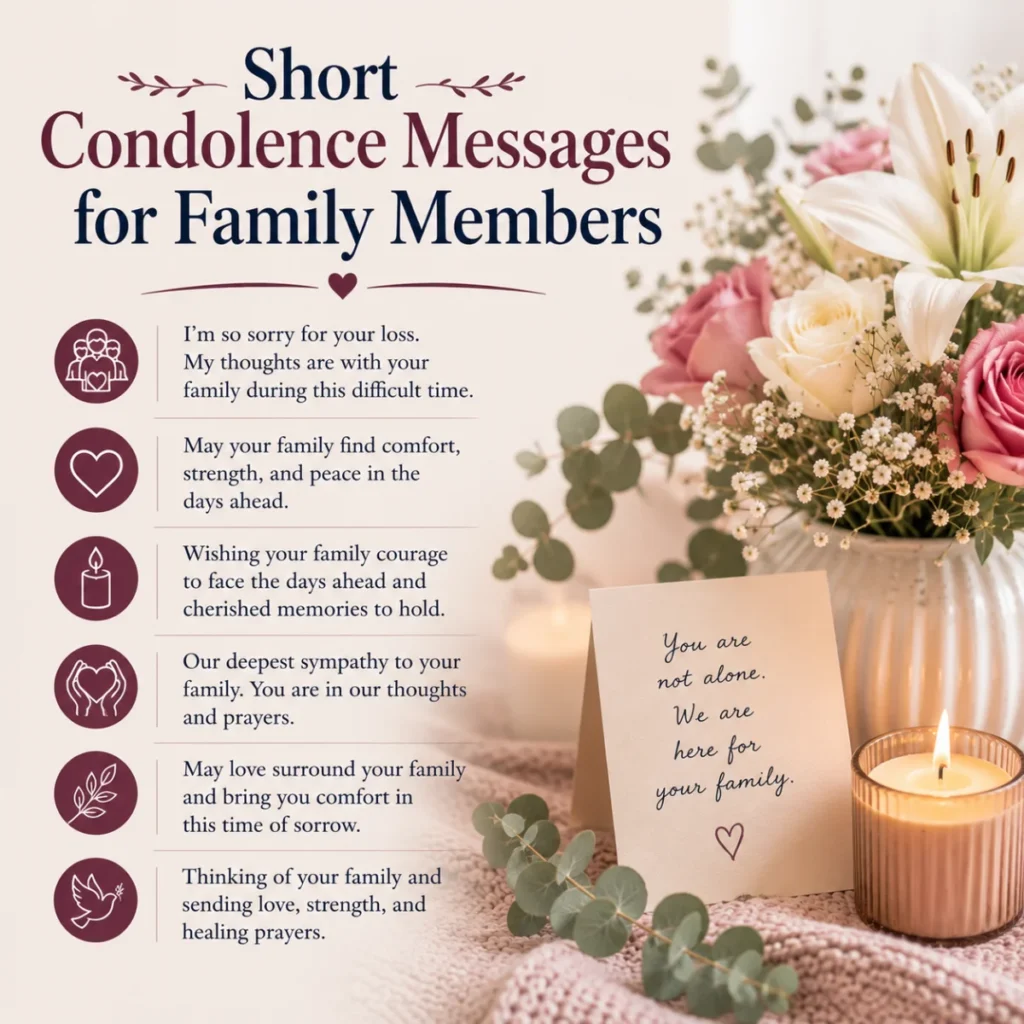
Family losses often require messages that emphasize love and togetherness.
- Our family shares in your grief.
- Sending love to all of you.
- We are deeply saddened by your loss.
- Thinking of your family during this difficult time.
- May you find strength in each other.
- Our hearts are with your family.
- Sharing your sorrow and pain.
- Sending prayers and comfort.
- Wishing your family peace and healing.
- We mourn with you.
- May loving memories bring comfort.
- Keeping your family in our thoughts.
- Our deepest sympathies to all of you.
- Sending support and love.
- Holding your family close in our hearts.
Sympathy Messages for a Coworker
Professional settings require respectful and appropriate language.
- Please accept my sincere condolences.
- Thinking of you and your family.
- Wishing you comfort and strength.
- My thoughts are with you during this difficult time.
- I am sorry to hear about your loss.
- Sending heartfelt sympathy.
- Please know you have our support.
- Wishing you peace and healing.
- Keeping you in my thoughts.
- My deepest sympathies.
- Sending comfort and support.
- Please take care of yourself.
- Thinking of you during this sad time.
- Wishing you strength in the days ahead.
- My condolences to you and your family.
Religious Short Condolence Messages

Faith-based messages can provide comfort for those who value spiritual support.
- May God comfort you during this difficult time.
- Keeping you in my prayers.
- May God grant you peace and strength.
- Praying for you and your family.
- May the Lord surround you with comfort.
- Sending prayers and heartfelt sympathy.
- May God’s love bring you peace.
- Trust in God’s strength and guidance.
- May their soul rest in peace.
- Praying for healing and comfort.
- May faith sustain you through this loss.
- God’s blessings be with you.
- Sending prayers for peace.
- May God ease your sorrow.
- Keeping you lifted in prayer.
Very Short Condolence Messages
Sometimes only a few words are needed.
- Deepest sympathy.
- So sorry for your loss.
- Thinking of you.
- Sending prayers.
- Heartfelt condolences.
- My deepest sympathy.
- Rest in peace.
- Sending love.
- Keeping you in my thoughts.
- With sympathy.
- Wishing you comfort.
- Sending strength.
- My heart is with you.
- You are in my prayers.
- Thinking of your family.
Short Condolence Text Messages
Text messages are often the fastest way to reach someone after hearing difficult news.
- Just heard the news. I’m so sorry for your loss.
- Thinking of you today and always.
- Sending my heartfelt condolences.
- Keeping you and your family in my prayers.
- My thoughts are with you during this difficult time.
- Sending strength and comfort your way.
- Wishing you peace and healing.
- I am deeply sorry for your loss.
- Please know I’m here if you need anything.
- Sending love and support.
Condolence Messages for the Loss of a Parent
The loss of a parent can be especially painful.
- I’m so sorry for the loss of your mother.
- Thinking of you after the loss of your father.
- Your parent will always be remembered with love.
- Sending comfort during this difficult time.
- May your parent’s memory bring you peace.
- My deepest condolences on your loss.
- Wishing you strength and healing.
- Holding you in my thoughts and prayers.
- Sending heartfelt sympathy.
- May cherished memories comfort you.
Condolence Messages for the Loss of a Spouse
These messages should be especially gentle and compassionate.
- My heart goes out to you.
- I am deeply sorry for your loss.
- Wishing you comfort and strength.
- Sending love during this difficult time.
- Thinking of you with heartfelt sympathy.
- May loving memories bring peace.
- Holding you in my thoughts.
- Sending prayers and support.
- Please accept my deepest condolences.
- Wishing you healing in the days ahead.
Common Mistakes to Avoid When Offering Condolences
Many people hesitate to send condolences because they fear saying the wrong thing. However, avoiding common mistakes can make your message more helpful.
Don’t Compare Grief
Avoid comparing their loss to your own experiences. Every person’s grief journey is different.
Don’t Use Forced Positivity
Statements such as “Everything happens for a reason” may unintentionally hurt rather than comfort.
Don’t Make It About Yourself
Focus on the grieving person instead of your own feelings.
Don’t Overcomplicate the Message
A simple expression of sympathy is often enough.
Don’t Disappear After Sending One Message
If appropriate, continue checking in over time. Ongoing support can be meaningful.
When a Short Message Is Better Than a Long One
Many people assume longer messages are more comforting. Interestingly, that’s not always true.
Short condolences work particularly well when:
- Sending a text message
- Writing in a sympathy card
- Commenting on social media
- Communicating professionally
- Offering immediate support after hearing the news
Additionally, short messages reduce the risk of unintentionally saying something insensitive.
How to Personalize a Short Condolence Message
Even a brief message can feel deeply meaningful when personalized.
Consider including:
- The person’s name
- The name of the deceased
- A positive memory
- A sincere offer of support
For example:
“I’m so sorry for the loss of Sarah. She was such a kind person. Thinking of you and your family.”
This small personal touch often makes a message feel more genuine.
Choosing the Right Tone for Different Situations
The tone of your condolence message should match your relationship with the recipient.
| Relationship | Recommended Tone |
|---|---|
| Close Friend | Warm and personal |
| Family Member | Loving and supportive |
| Coworker | Professional and respectful |
| Neighbor | Friendly and sincere |
| Social Media Contact | Brief and compassionate |
| Religious Friend | Faith-centered and comforting |
Accordingly, tailoring your message can make it more meaningful and appropriate.
Frequently Asked Questions
What is the best short condolence message 2?
A simple message such as “I am so sorry for your loss. Thinking of you and your family during this difficult time” is appropriate in many situations.
How do you express condolences in one sentence?
You can say, “Please accept my heartfelt condolences for your loss.”
Is it okay to send condolences by text?
Yes. In many cases, a thoughtful text message provides immediate support and lets someone know you’re thinking of them.
What should I avoid saying in a condolence message?
Avoid minimizing grief, offering unsolicited advice, or making comparisons to other losses.
How long should a condolence message be?
There is no perfect length. However, a few sincere sentences are often enough.
Can I use the same condolence message for everyone?
While general messages work well, personalizing them usually makes them more meaningful.
Should I mention the deceased person’s name?
Yes, when appropriate. Mentioning their name often feels more personal and respectful.
Final Thoughts
A thoughtful short condolence message 2 can provide comfort, compassion, and reassurance during one of life’s most difficult moments. Although no words can remove someone’s pain, a sincere expression of sympathy can remind them that they are supported and cared for.
Whether you’re writing a sympathy card, sending a text, posting online, or speaking in person, simple and heartfelt words are often the most meaningful. Focus on kindness, sincerity, and support, and your message will likely be appreciated during a challenging time.

Serhii Dunev is a passionate content creator dedicated to crafting meaningful texts, messages, and word inspirations. He aims to help people express their emotions clearly through simple and impactful words.