

Losing a loved one is one of life’s most difficult experiences. During such moments, finding the right words can feel overwhelming. A thoughtful short condolence message can offer comfort, express sympathy, and remind someone they are not alone in their grief.
Many people struggle to write condolence messages because they fear saying the wrong thing. However, a simple and sincere message is often enough. In most cases, grieving individuals appreciate genuine support more than perfectly crafted words.
Whether you’re sending a text, writing a sympathy card, posting a social media tribute, or emailing a colleague, this guide will help you choose appropriate and meaningful condolence messages.
Why Short Condolence Messages Matter

When someone experiences a loss, lengthy messages are not always necessary. Instead, a few heartfelt words can provide comfort during a difficult time.
A short condolence message can:
- Express sympathy respectfully
- Show emotional support
- Acknowledge someone’s loss
- Offer comfort during grief
- Let people know they are remembered
Furthermore, concise messages are often easier for grieving families to read and appreciate.
Because emotions can be overwhelming after a loss, simple expressions of kindness frequently have the greatest impact.
What Makes a Good Condolence Message?
Not every sympathy message feels appropriate. Therefore, understanding the key elements of a meaningful condolence message is important.
Generally, effective messages include:
| Element | Purpose |
|---|---|
| Sympathy | Acknowledges the loss |
| Kindness | Offers emotional support |
| Respect | Honors the deceased |
| Simplicity | Keeps the message sincere |
For example:
“I am deeply sorry for your loss. Please know that my thoughts are with you and your family during this difficult time.”
This message works because it is compassionate, respectful, and genuine.
Short Condolence Messages for Texts
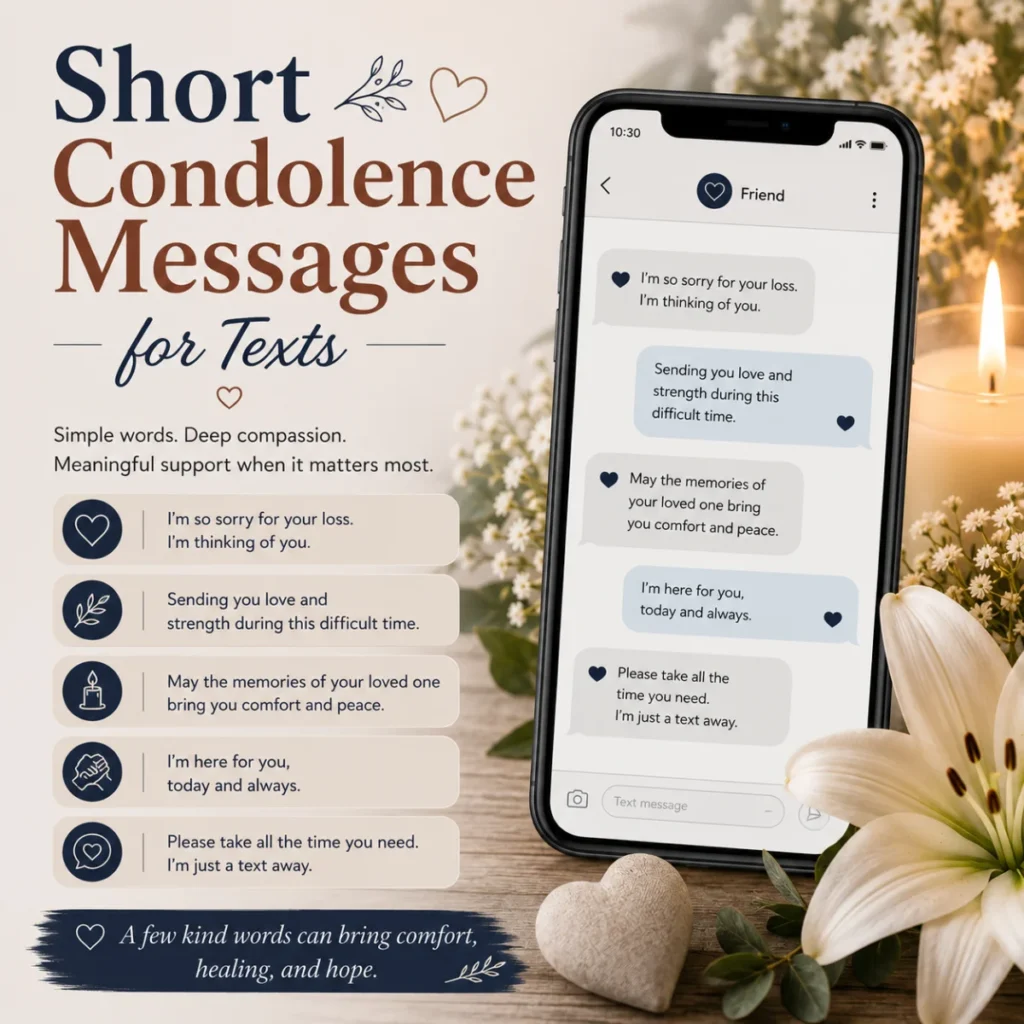
Many people prefer sending a quick message when they learn about a loss. Consequently, short text messages have become increasingly common.
Examples include:
- I’m so sorry for your loss.
- Thinking of you during this difficult time.
- My deepest condolences to you and your family.
- Sending love and strength your way.
- Keeping you in my thoughts and prayers.
- Wishing you comfort and peace.
- My heart goes out to you.
- Please accept my sincere sympathy.
- Sending heartfelt condolences.
- May you find strength in the days ahead.
Additionally, these messages work well when you want to express support without overwhelming the recipient.
Heartfelt Sympathy Messages
Sometimes a slightly more personal message feels appropriate. Therefore, heartfelt condolences can help communicate deeper compassion.
Consider these examples:
- I am truly sorry for your loss. Please know that you are in my thoughts.
- May loving memories bring you comfort during this difficult period.
- Wishing you peace, strength, and support as you navigate this loss.
- My heart aches for you and your family.
- Sending my deepest sympathy and warmest thoughts.
- May you find comfort in the love that surrounds you.
- Thinking of you and wishing you moments of peace.
- I hope cherished memories help ease your sorrow.
Moreover, heartfelt messages often provide reassurance during challenging times.
Sympathy Messages for Family Members
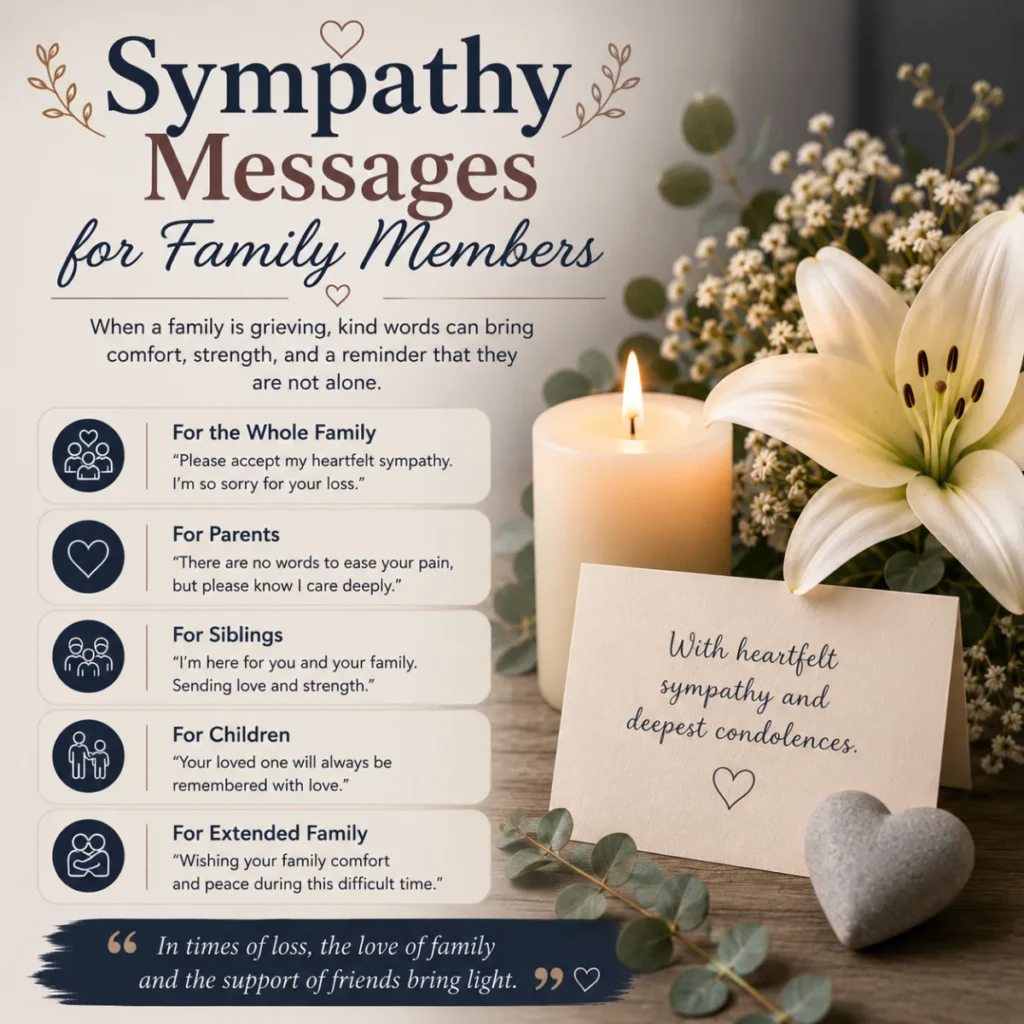
Losing a family member can be especially painful. Consequently, messages directed toward grieving relatives should be compassionate and supportive.
Examples include:
- My deepest sympathy to your entire family.
- Wishing your family comfort and strength during this difficult time.
- Please know that your loved one will always be remembered.
- Thinking of you and your family with heartfelt sympathy.
- Sending prayers and support to everyone affected by this loss.
- May your family find peace and healing in the days ahead.
Furthermore, acknowledging the family’s grief can help your message feel more personal.
Condolence Messages for Friends
Supporting a friend after a loss is incredibly important. Therefore, many people choose warm and caring messages that emphasize companionship.
Examples include:
- I’m here for you whenever you need anything.
- Sending you love and strength during this difficult time.
- Please know that you don’t have to face this alone.
- My thoughts are with you every step of the way.
- Wishing you comfort as you remember your loved one.
- I’m deeply sorry for your loss, my friend.
Likewise, offering practical support can be meaningful when appropriate.
Professional Condolence Messages
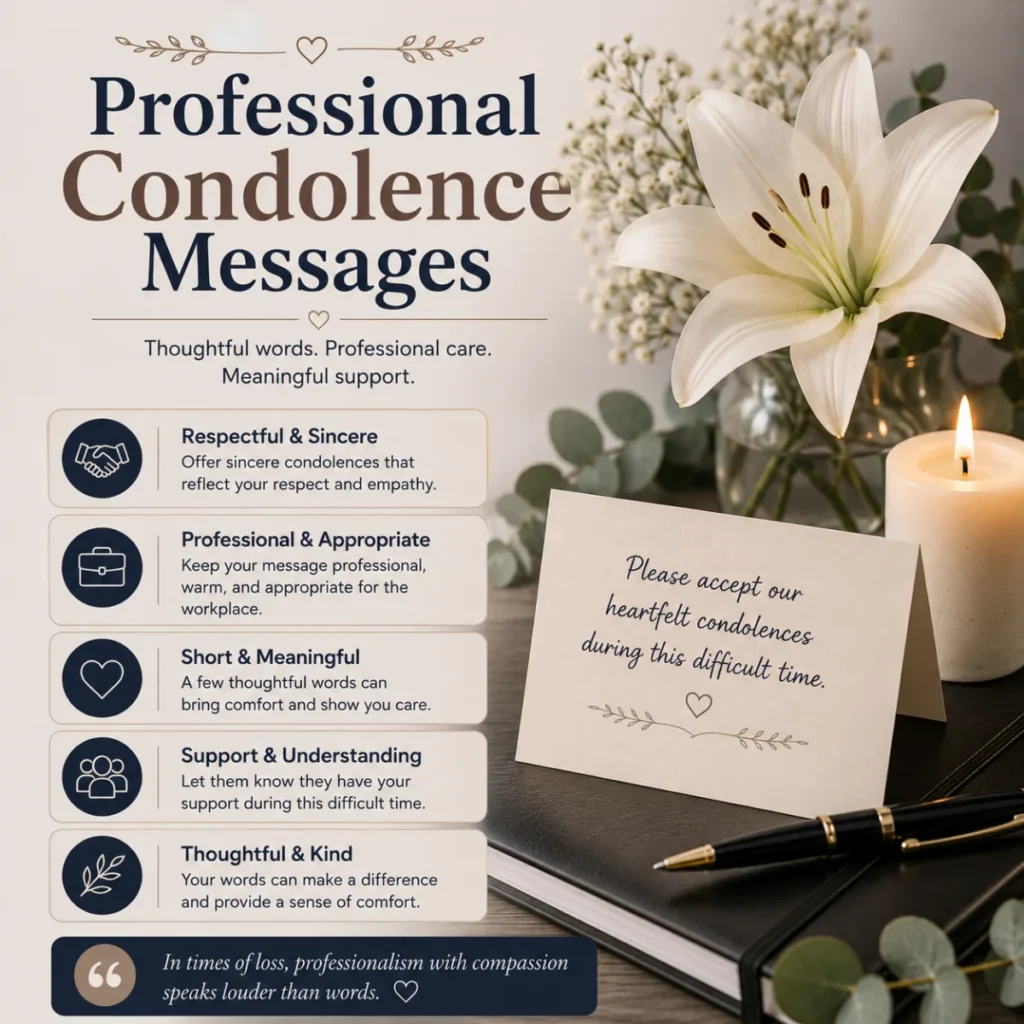
Workplace situations often require a respectful and professional tone. However, your message should still feel compassionate.
Examples include:
- Please accept my sincere condolences on your loss.
- My thoughts are with you and your family during this difficult time.
- Wishing you strength and comfort in the days ahead.
- We are deeply saddened to hear of your loss.
- Please know that our thoughts are with you.
- Sending heartfelt sympathy during this challenging period.
Consequently, professional condolence messages balance empathy with respect.
Religious Short Condolence Messages
For individuals who find comfort in faith, religious messages may provide reassurance. Nevertheless, it’s important to consider the recipient’s beliefs before sending them.
Examples include:
- Keeping you in my prayers.
- May God grant you comfort and peace.
- Praying for strength and healing during this difficult time.
- May God’s love surround you and your family.
- Sending prayers of comfort and support.
- May faith bring peace to your heart.
Additionally, faith-based messages can offer hope during periods of grief.
Sympathy Card Message Ideas
Many people struggle with what to write inside a sympathy card. Therefore, keeping your message simple often works best.
Examples include:
- With heartfelt sympathy and caring thoughts.
- Thinking of you and wishing you comfort.
- Sending love and condolences during this difficult time.
- May precious memories bring you peace.
- Wishing you strength and healing.
- Sharing in your sadness and remembering your loved one.
Because sympathy cards are often kept for years, sincere words can have lasting meaning.
What Not to Say in a Condolence Message
Many articles overlook this important topic. However, knowing what to avoid can prevent unintended discomfort.
Try to avoid statements such as:
- “Everything happens for a reason.”
- “They’re in a better place.”
- “At least they lived a long life.”
- “I know exactly how you feel.”
- “You’ll get over it soon.”
Although these comments may be well-intentioned, they can sometimes minimize a person’s grief.
Instead, focus on empathy, support, and acknowledgment.
When a Short Message Is Better Than a Long One
Not every situation requires a lengthy note. In fact, concise messages are often preferred.
A short condolence message may be ideal when:
- Sending a text message
- Reaching out immediately after hearing the news
- Communicating with a coworker
- Posting on social media
- Writing a brief sympathy card
As a result, your message remains respectful and easy to read.
Creative Ways to Express Sympathy
A condolence message is only one way to show support. Therefore, consider additional gestures when appropriate.
Options include:
- Sending flowers
- Writing a handwritten card
- Delivering a meal
- Making a donation in memory of the deceased
- Offering practical assistance
- Sharing meaningful memories
Furthermore, actions often provide comfort alongside words.
Common Mistakes When Writing Sympathy Messages
Many people worry about saying the wrong thing. Nevertheless, avoiding a few common mistakes can help.
Making the Message About Yourself
Focus on the grieving person rather than your own experiences.
Using Generic Phrases Only
Personal touches often make messages more meaningful.
Offering Unsolicited Advice
Grieving individuals usually need support more than guidance.
Delaying Communication Too Long
Even a brief message is often appreciated when sent promptly.
Therefore, don’t wait for perfect words before expressing sympathy.
FAQs About Short Condolence Messages
What is the best short condolence message?
A simple message such as “I’m deeply sorry for your loss” is often appropriate and meaningful.
How do you express sympathy in a text message?
Keep your message brief, sincere, and supportive. For example, “Thinking of you and sending my heartfelt condolences.”
Can condolence messages be short?
Yes. In many situations, short messages feel respectful and easier for grieving individuals to read.
What should I write in a sympathy card?
Express sympathy, acknowledge the loss, and offer support in a sincere manner.
Is it okay to send condolences through text?
Yes. Many people use text messages to offer immediate support after learning about a loss.
Should I mention the deceased by name?
When appropriate, mentioning the person’s name can make your message feel more personal.
What should I avoid in a condolence message?
Avoid minimizing grief, making comparisons, or offering unsolicited advice.
Final Thoughts
A thoughtful short condolence message can provide comfort, support, and reassurance during one of life’s most difficult moments. While finding the right words may seem challenging, sincerity is often more important than perfection.
Most importantly, let the grieving person know they are not alone. Whether your message is written in a text, card, email, or social media post, genuine compassion can make a meaningful difference.

Serhii Dunev is a passionate content creator dedicated to crafting meaningful texts, messages, and word inspirations. He aims to help people express their emotions clearly through simple and impactful words.