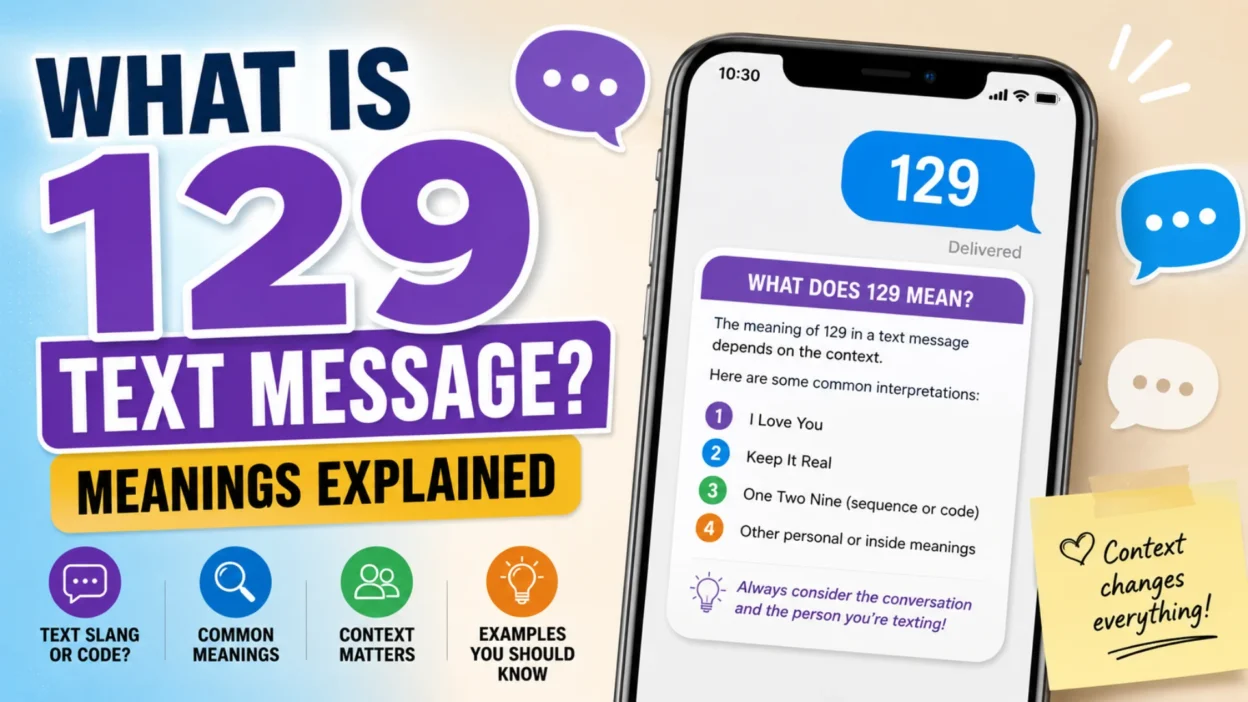
Seeing “129” pop up on your phone screen can be confusing. The number looks like a short code, but it doesn’t match the usual five- or six-digit format you might expect from a business or marketing sender. You might wonder if it’s a scam, a system glitch, or something else entirely. The truth is that “129” doesn’t have just one meaning. Its significance shifts depending on where you live, which carrier you use, and the context in which the message appears. In some cases, it’s a harmless network notification. In others, it’s a cultural shorthand with nothing to do with texting at all. This guide breaks down every common interpretation of the 129 text message so you can figure out exactly what you’re looking at.
T-Mobile and the 129 Visual Voicemail Glitch
For many T-Mobile customers in the United States, a message from 129 is directly tied to Visual Voicemail. When your phone isn’t fully compatible with the Visual Voicemail application, the network’s internal notification signals can arrive as garbled or blank texts from the number 129. Instead of seeing a clean voicemail alert, you get what looks like encrypted characters or an empty message. This typically happens when Visual Voicemail is active on your account but the app isn’t properly installed or configured on your device. Users have reported receiving dozens of these messages in a single day, especially after listening to or deleting voicemails. The messages themselves carry no content you need to read. They’re protocol signals that your phone failed to interpret correctly.
How to Stop T-Mobile 129 Voicemail Texts
The most reliable fix is to ensure the Visual Voicemail app is installed and functioning on your phone. If that doesn’t resolve it, you can contact T-Mobile customer service and ask them to remove Visual Voicemail from your account entirely. Another workaround is to blacklist the number 129 using your phone’s built-in blocking features or a third-party firewall app. The messages should stop once the underlying voicemail service is either properly configured or disabled.
The 129 Short Code in New Zealand
If you’re in New Zealand, 129 is a legitimate three-digit short code listed on the Spark and Skinny networks. It’s categorized as “Other” in the public shortcode directories, which means it doesn’t belong to a specific brand or premium service. Sending a text to 129 is free, and receiving messages from it is also free. No New Zealand carrier currently publishes a brand name associated with this code, so it may be a reserved number or an internal carrier function. If you want to stop receiving messages from 129 in New Zealand, you can reply with the word STOP. Under the NZ TCF Mobile Messaging Services Code, commercial senders must honor STOP requests within two business days. However, transactional messages like appointment reminders or verification codes are exempt from this rule.
“Meoseon 129”: The Korean Internet Slang
In South Korea, “129” has an entirely different life as a piece of internet slang. The phrase “머선 129” (pronounced meoseon il-gu) is a playful phonetic rendering of the Gyeongsang dialect phrase “무슨 일이고?” which translates roughly to “What’s going on?” or “What’s the matter?”. The word “일이고” (iligo) sounds similar to the numbers “1-2-9” when spoken quickly, so young Koreans began substituting the digits for the phrase. The expression gained mainstream attention through variety shows and social media, and it’s now used casually when someone encounters a surprising or confusing situation. If you see “129” in a Korean-language text or social media post, it’s almost certainly this slang term, not a carrier code or a system message.
129 as a Technical Flag in SMS Protocols
Beyond consumer-facing contexts, 129 appears in telecommunications standards as a type-of-number indicator. In SMS protocol documentation, a value of 129 in a specific data field indicates that a phone number is in national format, as opposed to international format (which uses 145). This is a technical detail that most people will never encounter directly. It only becomes visible in raw SMS logs, network diagnostic tools, or developer documentation. If you’re a software engineer working with SMS gateways or a telecom professional analyzing message headers, you might see 129 referenced in this way. For everyday phone users, this meaning is irrelevant.
When 129 Is a Scam: Red Flags to Watch For
While 129 itself is not inherently a scam number, scammers sometimes spoof short codes or use variations of legitimate numbers to trick people. If you receive a text that appears to come from 129 but asks you to click a link, provide personal information, or call a phone number, treat it as suspicious. Legitimate system messages from carriers do not ask for passwords, Social Security numbers, or payment details. Scammers often impersonate banks, delivery services, or government agencies using spoofed numbers that look official. If a message from 129 contains a URL, a request for your PIN, or an urgent threat about your account being suspended, do not engage. Report the message to your carrier and delete it.
Why 129 Messages Sometimes Appear Blank or Garbled
One of the most common complaints about 129 messages is that they arrive with no readable content. You might see a blank bubble, a series of strange characters, or a notification that disappears before you can open it. This happens because the message is a network protocol signal, not a human-readable text. Your phone’s messaging app tries to display it as a standard SMS, but the content doesn’t conform to normal text formatting. In the case of T-Mobile Visual Voicemail, the message may contain encoded data that the voicemail app was supposed to process silently. When the app isn’t working correctly, the raw data leaks into your inbox as a garbled message. Deleting these messages is safe. They don’t contain viruses or malicious code.
129 in Other Countries and Contexts
The meaning of 129 isn’t limited to the United States, New Zealand, or Korea. In some countries, 129 is used as a short code for specific services. In Pakistan, for example, 129 has been used for managing friends-and-family lists and activating international SMS roaming on certain networks. India, short code 129 was allocated to a state government health information helpline. The common thread is that 129 is a low-digit code often reserved for administrative or internal functions rather than commercial marketing. If you’re traveling or using a local SIM in another country, the 129 code you encounter may serve a completely different purpose from the one you’re familiar with.
Common Mistakes People Make With 129 Messages
The first mistake is assuming that every 129 message means the same thing. As this guide shows, context is everything. The second mistake is panicking. Most 129 messages are system-generated and harmless. The third mistake is trying to reply to a 129 message. If the message is a network signal or a short code, replying won’t reach a human and may even trigger additional automated responses. The fourth mistake is confusing 129 with 911, 999, or other emergency numbers. While the digits may look similar, they serve entirely different functions. Finally, some people assume that a 129 message means they’ve been charged for something. In most cases, incoming system messages are free.
When You Should Contact Your Carrier About 129
If the 129 messages are frequent, disruptive, or accompanied by unexpected charges on your bill, it’s worth contacting your carrier. Describe the messages, note how often they arrive, and ask whether any premium services or subscriptions are active on your line. In the T-Mobile case, customer service can remove Visual Voicemail from your account if the notifications are causing problems. For New Zealand users, if STOP requests aren’t honored, you can escalate the issue to your carrier. If you suspect fraud, report the messages to your carrier’s spam team and consider filing a complaint with the relevant telecommunications authority.
Frequently Asked Questions About 129 Text Messages
Is 129 a real phone number?
No. In most contexts, 129 is a short code or an internal network identifier, not a standard phone number. You cannot call it or use it for two-way conversations.
Why do I keep getting blank texts from 129?
On T-Mobile, blank or garbled 129 messages usually come from a Visual Voicemail configuration issue. Installing the Visual Voicemail app or removing the service from your account should stop them.
Does 129 cost me anything?
In New Zealand, messages to and from 129 are free. On T-Mobile, incoming system messages are typically free as well. You should only worry if you see unexplained charges on your bill.
Can I block 129?
Most phones allow you to block specific numbers or short codes. You can also use a third-party firewall app. On T-Mobile, removing Visual Voicemail from your account is a more permanent solution.
Is “meoseon 129” related to text messages?
No. “Meoseon 129” is Korean internet slang that means “What’s going on?” It has nothing to do with SMS or carrier codes.
What should I do if I get a 129 message asking for personal information?
Do not respond, click any links, or provide any details. Report the message to your carrier and delete it. Legitimate carriers never ask for sensitive information via text.
Why does 129 appear in SMS protocol documentation?
In technical standards, 129 is a type-of-number indicator that tells the network a phone number is in national format. This is only relevant to developers and engineers.
Are 129 messages dangerous?
No. They are system-generated notifications or protocol signals. They don’t carry viruses and cannot harm your device.
Final Thoughts: Context Is Everything
The 129 text message is a perfect example of how a single number can mean radically different things depending on where you are and who you’re talking to. For a T-Mobile customer in the US, it’s likely a voicemail notification glitch. For a New Zealander, it’s a free short code with no published brand. Korean social media user, it’s a playful way to ask what’s happening. And for a telecom engineer, it’s a technical flag buried in SMS headers. The next time you see 129 on your screen, take a moment to consider the context. If the message is blank or garbled and you’re on T-Mobile, it’s almost certainly Visual Voicemail. If you’re in New Zealand, it’s a legitimate short code. And if you see it in a Korean chat, someone is probably just asking what’s going on.

Serhii Dunev is a passionate content creator dedicated to crafting meaningful texts, messages, and word inspirations. He aims to help people express their emotions clearly through simple and impactful words.