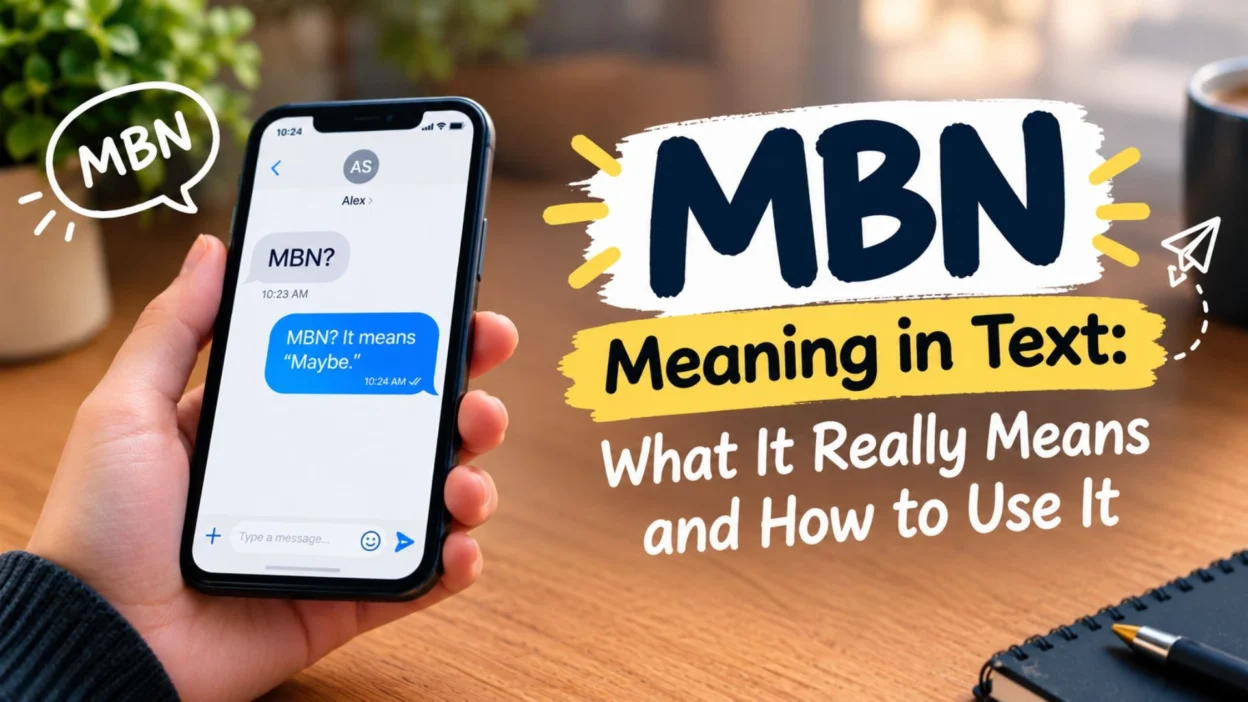
You’re scrolling through Instagram, and under your vacation photo, someone drops three letters: “MBN.” No emoji. No context. Just MBN. Are they happy for you? Jealous? Throwing shade? That ambiguity is exactly why the mbn meaning in text trips up so many people.
At its core, MBN stands for “must be nice.” It’s an acronym people use to react to someone else’s good fortune, whether that’s a new car, a beach vacation, or a three-day weekend. In everyday usage, MBN can serve as a serious reminder to be polite or as a way of expressing dissatisfaction or envy, often used as a hashtag.
But here’s the catch: those three letters can carry warmth, sarcasm, or genuine bitterness depending on who’s typing them and how. Misread the tone, and a friendly comment can suddenly feel like a jab. This guide unpacks everything about MBN—its meanings, its platform-specific behaviors, and how to respond without stepping on toes.
Where MBN Came From and Why It Stuck
The phrase “must be nice” isn’t new. People have been saying it out loud for decades, usually with a raised eyebrow or a sigh. What changed was the internet’s love of shortcuts. As texting and social media compressed language into acronyms, “must be nice” naturally became MBN.
Unlike some slang that fades within a year, MBN stuck around because it fills a specific emotional gap. It lets you acknowledge someone’s good fortune without fully committing to either celebration or resentment. That middle ground is incredibly useful in digital conversations, where tone is notoriously hard to read.
Its staying power also comes from versatility. The same three letters work in a genuine congratulatory comment, a playful joke between friends, and a passive-aggressive subtweet. Few acronyms cover that much emotional range.
The Cultural Shift Behind the Acronym
Something interesting happened as MBN spread. The phrase “must be nice” originally carried a slightly wistful, almost polite envy. But online, it evolved into something sharper. On platforms like TikTok and Twitter, MBN became a tool for calling out privilege, flexing, and tone-deaf wealth displays. A comment like “MBN to have daddy’s credit card” isn’t just envy—it’s social commentary wrapped in three letters.
That dual nature explains why MBN thrives. It can be harmless or pointed, and the ambiguity is part of its appeal.
The Two Sides of MBN: Genuine vs. Sarcastic
Most people who search for the MBN meaning in text eventually discover the same thing: context is everything. The acronym itself doesn’t change, but the intent behind it splits into two distinct camps.
When MBN Is Genuine
Believe it or not, MBN isn’t always salty. You can use it sincerely when you’re truly happy for someone. The tone is warm, the emoji choices are positive, and the message lands as a compliment. Think of it as saying, “That’s wonderful—I’m glad for you.”
Examples of genuine MBN usage include:
- Celebrating a friend’s win: “You got the scholarship? MBN! So proud of you.”
- Admiring a sweet moment: “That couple volunteering at the shelter every weekend? MBN.”
- Acknowledging hard work paying off: “You finally got the promotion. MBN, you earned it.”
In these cases, MBN functions as shorthand for “you deserve that.” No hidden edge, no bitterness.
When MBN Turns Sarcastic
Here’s where things get tricky. In most online contexts, MBN skews sarcastic or passive-aggressive. The person typing it might be genuinely jealous, mildly annoyed, or just joking around. Without vocal tone or facial expression, the reader has to guess which one.
Sarcastic MBN often looks like this:
- Commenting on luxury: “Another first-class flight? MBN.”
- Reacting to schedule envy: “You get off at 3 on Fridays? MBN.”
- Calling out privilege: “MBN to not worry about rent this month.”
Notice how none of these are outright hostile. They sit in a gray zone—playful enough to laugh off, sharp enough to sting if you’re not in the mood.
How Emojis Change the Entire Meaning of MBN
If you want to understand MBN in a specific message, look at what comes after it. Emojis aren’t decoration; they’re the emotional instruction manual. A single crying-laughing face or a fire emoji can flip the meaning entirely.
Here’s a quick reference for reading MBN tone:
- MBN 😂 = Playful jealousy, zero malice. They’re laughing with you.
- MBN 🔥 = Pure hype. They’re genuinely celebrating your win.
- MBN 😭 = Wistful envy. They wish they were in your shoes, but it’s friendly.
- MBN 🙄 = Clear sarcasm. They’re not impressed, and they want you to know.
- MBN (no emoji) = Impossible to read. Proceed with caution.
That last one is the trickiest. A bare “MBN” in a comment section could mean anything from “good for you” to “I’m seething.” If you’re unsure, the safest move is to take it at face value and respond warmly. If they meant it sarcastically, your gracious reply makes their edge look silly.
How MBN Shows Up on Different Platforms
The MBN meaning in text stays consistent across apps, but the social dynamics shift depending on where you are. Each platform has its own unwritten rules about what MBN signals.
Instagram: The Envy Playground
Instagram is MBN’s natural habitat. The platform is built around curated highlights—vacations, brunches, new purchases—and MBN thrives in that environment. People drop it in comments to acknowledge someone’s good life without writing a paragraph.
On Instagram, MBN is often lighthearted. The visual nature of the platform softens the blow. When someone comments “MBN” under a beach photo, they’re usually saying, “That looks amazing, and I’m a little jealous.” It’s rarely meant to wound.
TikTok: Fast, Funny, and Self-Aware
On TikTok, MBN moves quickly. It appears in comments on videos about luxury apartments, expensive meals, or someone enjoying a minor convenience that most people can’t afford. The tone here skews humorous and self-aware.
A popular TikTok pattern involves someone showing off something small—like a dishwasher in their apartment—and the comments flood with “MBN having basic appliances 😂.” It’s a joke about how expensive life has become, not a personal attack.
Snapchat: Quick Reactions
Snapchat’s ephemeral nature makes MBN feel more casual. People use it in replies to Stories, where the message disappears and the stakes are low. “MBN” on Snapchat usually means “that’s cool, I’m jealous in a fun way.” Because the content vanishes, there’s less pressure to overanalyze.
Texting: One-on-One Dynamics
In direct text conversations, MBN can feel more personal. If a close friend says “MBN” after you share good news, it’s almost always supportive. If an acquaintance drops it, the intent might be murkier. Texting lacks the audience of social media, so MBN in a private chat often reflects the actual relationship between the two people.
When You Should Avoid Using MBN
Not every situation calls for MBN. In some contexts, it can come across as dismissive, petty, or just plain confusing. Knowing when to skip it is just as important as knowing what it means.
Consider avoiding MBN in these situations:
- Professional settings: A coworker shares a promotion, and you reply “MBN.” That reads as jealous, not congratulatory. Use “Congratulations” or “Well deserved” instead.
- Serious achievements: If someone graduates, gets married, or has a baby, MBN can feel flippant. Match the weight of the moment.
- With strangers or new acquaintances: The sarcastic edge of MBN can offend people who don’t know your humor.
- When someone is struggling: If a friend shares a setback, MBN is wildly inappropriate. It’s a response to good fortune, not bad.
- In formal writing: Emails, reports, and applications have no place for MBN. Spell it out or omit it.
The general rule is simple: if the relationship is formal or the topic is serious, leave MBN out.
How to Respond to MBN Without Creating Awkwardness
Getting an MBN reply can leave you unsure how to react. Do you say thanks? Ignore it? Fire back? The right response depends on who sent it and what they probably meant.
Here’s a practical guide:
- If it seems genuine: Say “Thanks!” or “Appreciate it!” Keep it warm and move on.
- If it’s a close friend being playful: Tease them back. “Come with me next time” or “Your turn soon.”
- If it feels passive-aggressive: Don’t take the bait. A simple “Thanks” or a heart emoji defuses the tension without engaging.
- If you genuinely can’t tell: Ask. “Was that a jealous MBN or a happy MBN?” Most people will clarify, and the question itself breaks the ice.
The worst response is to get defensive. MBN is rarely worth a confrontation, especially in public comment sections.
Generational and Cultural Perspectives on MBN
Age shapes how people interpret MBN. Younger generations, especially Gen Z and millennials, treat it as second nature. They’re fluent in the tonal shifts and emoji cues that make MBN readable. For them, it’s just another tool in the texting toolkit.
Older generations, however, may not recognize it at all. Someone who grew up without text slang might read “MBN” as gibberish or assume it’s a typo. That gap can create confusion in mixed-age group chats or family conversations.
Cultural Differences
MBN is most prevalent in English-speaking countries, particularly the United States. It has spread through social media to other regions, but its usage varies. In some cultures, directly expressing envy—even playfully—is considered rude. People in those contexts might avoid MBN altogether, preferring more neutral responses.
Common Mistakes People Make with MBN
Even a three-letter acronym can go wrong. Here are the most frequent MBN missteps and how to sidestep them:
- Assuming it’s always sarcastic: As covered earlier, MBN can be genuine. Don’t read malice where there’s none.
- Using it with people who won’t understand: If the other person isn’t fluent in text slang, MBN creates confusion, not connection.
- Dropping it in professional chats: Workplace Slack channels and emails aren’t the place for MBN. It undermines your credibility.
- Overusing it: If every comment you leave is “MBN,” people will notice. It starts to feel bitter rather than playful.
- Ignoring the emoji: Sending a bare “MBN” when you meant it warmly is a missed opportunity. One emoji changes everything.
MBN vs. Similar Texting Acronyms
MBN doesn’t exist in a vacuum. It shares space with other acronyms that express envy, frustration, or casual acknowledgment. Knowing the differences helps you choose the right one.
- MBN (Must Be Nice): Expresses envy or admiration, often with a sarcastic edge.
- HML (Hate My Life): Expresses personal frustration, not envy of someone else.
- SMH (Shaking My Head): Disapproval or disappointment, not jealousy.
- FOMO (Fear of Missing Out): Anxiety about missing something fun, not commenting on someone else’s fortune.
- Jelly (Jealous): A more direct, affectionate way to say you’re envious.
The key distinction is that MBN focuses outward—it’s about someone else’s situation. HML and SMH focus inward or on a broader frustration.
Expert Tips for Using MBN Like a Native
If you want to use MBN effectively, these guidelines will keep you out of trouble:
- Match the relationship: Use MBN with friends and peers, not bosses or clients.
- Pair it with context: “MBN, that looks incredible” is clearer than a bare “MBN.”
- Read the room: In a comment section full of genuine congratulations, a sarcastic MBN stands out for the wrong reasons.
- Use emojis intentionally: They’re your tone-of-voice substitute. Choose wisely.
- Know when to spell it out: Sometimes “Must be nice!” written out hits harder and clearer than the acronym.
Myths vs. Facts About MBN
- Myth: MBN always means the person is jealous.
- Fact: It can be genuine admiration, playful teasing, or light sarcasm.
- Myth: MBN is only for young people.
- Fact: While Gen Z popularized its online usage, people of all ages use it.
- Myth: MBN is rude.
- Fact: It’s neutral on its own; tone and context determine whether it’s friendly or sharp.
- Myth: MBN is outdated.
- Fact: It remains widely used across Instagram, TikTok, Snapchat, and text messaging.
Frequently Asked Questions About MBN
What does MBN mean in a text from a girl?
It usually means “must be nice.” She’s reacting to something good in your life—a new purchase, a fun plan, or a lucky break. The tone could be genuine or playful, depending on your relationship and whether she included an emoji.
Is MBN flirting?
Sometimes. MBN can be a low-key way to express interest or admiration, but it’s also used platonically. If she follows up with questions or keeps the conversation going, there might be more to it. A single MBN on its own isn’t a clear signal.
What should I reply to MBN?
A simple “Thanks!” works in most cases. If you’re close with the person, you can tease back: “Jealous?” or “Come with me next time.” If it feels passive-aggressive, keep your reply short and gracious. Don’t escalate.
Does MBN always mean “must be nice”?
In texting and social media, yes—that’s the dominant meaning. However, MBN has other definitions in different contexts. It can stand for Magic Ball Network, Moody Broadcasting Network, or Murder By Numbers (the movie). In casual chat, though, “must be nice” is almost always what’s intended.
Is MBN appropriate for work?
Generally, no. Workplace communication should stay professional. Use “Congratulations” or “That’s great to hear” instead. MBN carries a casual, sometimes sarcastic tone that doesn’t translate well to professional settings.
What’s the difference between MBN and HML?
MBN is about someone else’s good fortune—”must be nice” for you. HML is about your own bad situation—”hate my life.” They express opposite emotions and shouldn’t be confused.
Can MBN be used in a group chat?
Yes, but it can be ambiguous. If you’re responding to a specific person’s news, tag them or quote their message. Otherwise, the group might not know who you’re addressing.
Is MBN still popular in 2026?
Yes. It remains a common abbreviation in texting and social media, especially among Gen Z and millennials. While new slang emerges constantly, MBN has staying power because it’s short, versatile, and emotionally flexible.
Final Thoughts on the MBN Meaning in Text
The mbn meaning in text boils down to three words: must be nice. But those three words carry a surprising amount of emotional weight. They can celebrate, tease, or quietly resent—all depending on who’s typing and how they frame it.
Understanding MBN isn’t just about decoding an acronym. It’s about reading tone in a medium that strips tone away. The next time you see MBN in your notifications, you’ll know exactly what to look for: the emoji, the relationship, and the context. And when you use it yourself, you’ll do so with intention rather than accident. That’s the difference between someone who knows the slang and someone who actually understands it.

Serhii Dunev is a passionate content creator dedicated to crafting meaningful texts, messages, and word inspirations. He aims to help people express their emotions clearly through simple and impactful words.