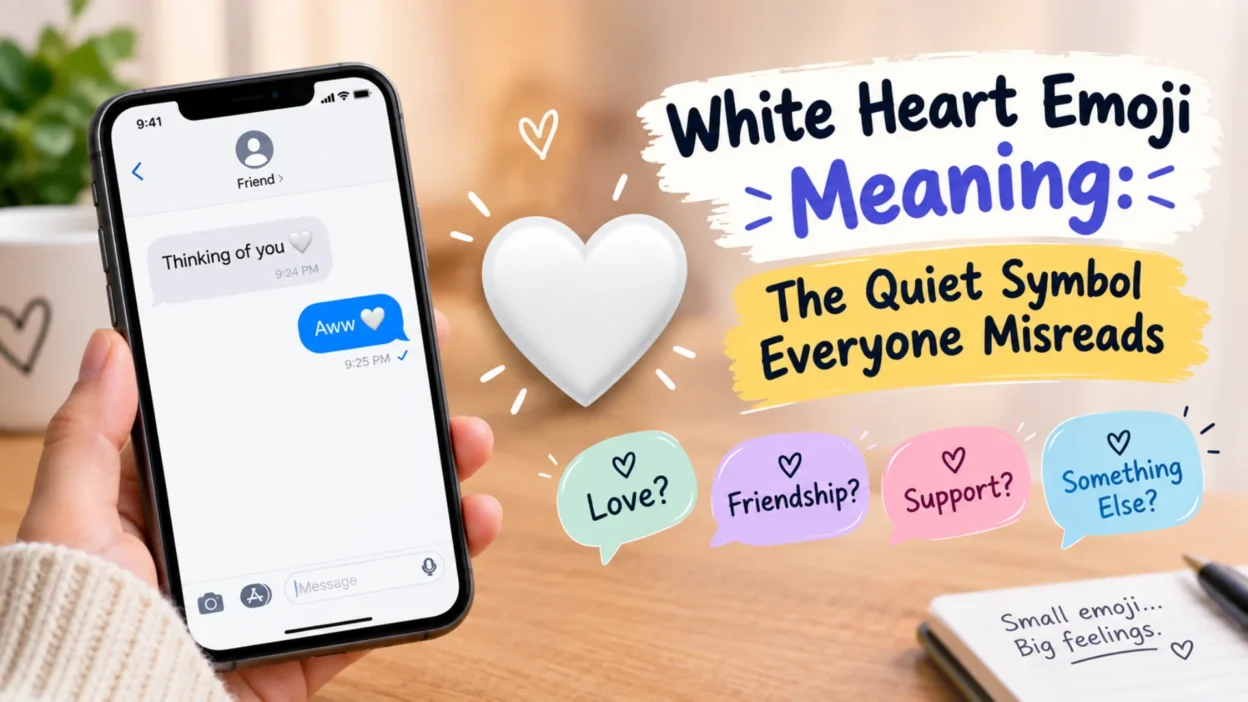
You’ve seen it pop up in a text, a comment, or an Instagram story. Maybe someone sent it after you shared something personal, and you weren’t sure how to take it. The white heart emoji doesn’t shout. It doesn’t demand attention like its red counterpart. Yet its understated presence carries a surprising amount of emotional weight. Understanding what it means requires looking beyond the color and into the context of the conversation.
Unlike the red heart, which almost always signals romance or passion, the white heart operates in quieter territory. It can mean pure love, deep friendship, emotional support, or even grief. Sometimes it’s just an aesthetic choice. In many cases, the sender is saying something they can’t quite put into words. That ambiguity is exactly why people search for its meaning.
This guide breaks down every common interpretation, shows you how to read the context, and explains when this emoji works — and when it doesn’t.
Why the White Heart Feels Different From Other Hearts
Every colored heart on your emoji keyboard carries its own emotional temperature. The red heart is bold and unmistakable. The blue heart often signals friendship or a corporate-safe kind of affection. The green heart leans casual, sometimes tied to environmental themes. The black heart? That’s irony, dark humor, or pure aesthetic. The white heart sits in a lane of its own.
Visually, white communicates calm, softness, and sincerity without intensity. It’s the emoji equivalent of a hand placed gently on someone’s shoulder. It doesn’t shout. It doesn’t demand anything back. Consequently, it can be difficult to read if you’re not used to it. That quiet quality is precisely what makes it so versatile.
Interestingly, this emoji arrived relatively late to the keyboard. Unicode added the white heart in 2019 as part of a broader push to diversify heart colors. Since then, it has carved out a distinct identity. It’s not a replacement for the red heart. Instead, it occupies its own emotional space — one that prioritizes sincerity over spectacle.
The Core Meanings People Actually Use It For
Most people reach for the white heart in one of a few specific situations. Knowing these core meanings helps you interpret it faster, whether you’re on the receiving end or deciding whether to send one yourself.
Pure, Unconditional Love
At its heart — pun intended — this emoji represents a love that feels untainted and deep. It’s the kind of love a parent has for a child, or the steady affection between partners who have been together for years. Unlike the red heart, which can feel performative or passionate, the white heart carries a sense of quiet permanence.
If someone sends you this emoji after a meaningful conversation, they’re likely telling you that you matter to them in a profound way. It’s an “I love you” without the pressure of romance. That distinction matters, especially in friendships where romantic signals could complicate things.
Emotional Support During Hard Times
The white heart has become a go-to symbol for showing support when someone is struggling. If a friend loses a job, goes through a breakup, or faces a health scare, this emoji says: “I’m here. You’re not alone.” It’s gentler than a red heart and more personal than a thumbs-up.
You’ll often see it paired with messages like “thinking of you” or “here if you need anything.” The muted color feels appropriate for serious moments. Sending a bright red heart during a difficult time can feel tonally wrong. The white heart strikes the right balance.
Grief, Mourning, and Condolences
This might be the most important usage to understand. The white heart has become a standard symbol for grief and remembrance on social media. You’ll see it in memorial posts, tribute captions, and comment sections after someone passes away. Its clean, solemn appearance makes it feel respectful.
When paired with other symbols of peace — like the dove or the peace sign — it signals solidarity with pacifist causes or collective mourning. In many online communities, the white heart is considered the safest, most respectful emoji to use when acknowledging someone else’s loss. If you’re unsure what to send in a moment of grief, this is often the right choice.
Close Bonds Without Romantic Undertones
Best friends, siblings, and teammates use the white heart to signal a bond that runs deep but isn’t romantic. It’s a way of saying “you’re my person” without any implication of attraction. For many friend groups, it becomes a shared shorthand — a private symbol of connection.
This usage is especially common among younger users who want to express closeness without the heaviness of a red heart. It keeps the relationship light while still acknowledging genuine care. In that sense, the white heart is a boundary-respecting emoji.
Admiration and Quiet Respect
Sometimes, the white heart conveys admiration rather than love. You might use it when a colleague shares a project they’re proud of, or when a creator posts something you find genuinely impressive. The white color allows you to show respect or idealization without overstepping.
It’s also a common reaction to someone’s appearance or style, particularly in the “clean girl” aesthetic that dominated TikTok in recent years. In those contexts, it functions almost like a compliment — understated, tasteful, and intentional.
How Platform Context Changes the Meaning
The same emoji can mean different things depending on where you encounter it. Platform norms shape interpretation in subtle but important ways.
TikTok: Wholesome Content and Aesthetic Vibes
On TikTok, the white heart thrives in comments and captions on wholesome videos. Creators use it to signal sincerity without being overly sentimental. It also fits the minimalist, clean aesthetic that became popular around 2022. If you see it in a TikTok comment, it usually means the person found the content genuinely touching.
However, TikTok users also deploy it ironically on occasion. In those cases, it softens a snarky comment — the digital equivalent of a polite smile while delivering a mild judgment. Context and tone are everything.
Instagram: Aesthetic Captions and Memorial Posts
Instagram is where the white heart’s aesthetic role shines brightest. It appears in captions for minimalist photos, in stories announcing new beginnings, and in memorial tributes. Because Instagram prioritizes visual presentation, the emoji often functions as a design element as much as an emotional one.
That said, its grief usage is prominent on this platform too. If someone posts a photo of a loved one who has passed, you’ll frequently see a stream of white hearts in the comments. It has become a quiet ritual of collective respect.
Snapchat and Text Messages: Intimate and Personal
In private messaging, the white heart tends to carry more weight. It’s not a casual reaction. When someone sends it in a one-on-one conversation, they’re usually making a deliberate choice. It can signal affection, support, or a desire for closeness without pressure.
Snapchat’s ephemeral nature makes the emoji feel even more intentional. A white heart in a disappearing message often means the sender wanted to express something tender without leaving a permanent record.
Twitter/X: Memorials and Minimalist Reactions
On Twitter/X, the white heart appears most often in memorial contexts. It’s also used as a minimalist alternative to the red heart when someone wants to show appreciation without being effusive. The platform’s text-heavy format means the emoji often stands alone, carrying the emotional weight of an entire reply.
When the White Heart Might Signal Romantic Interest
Here’s where things get tricky. The white heart isn’t inherently romantic, but it can lean that way depending on context. If someone you’re dating sends it after a meaningful conversation, it likely carries romantic undertones. The same emoji from a casual acquaintance probably doesn’t.
The key difference lies in frequency and timing. A single white heart in a long thread of messages might be casual. A white heart sent late at night, after a deep conversation, or in response to something vulnerable carries more weight. If you’re unsure, look at the broader pattern of communication rather than the emoji in isolation.
Common Mistakes People Make With This Emoji
The white heart is easy to misuse, largely because its meaning is so context-dependent. Here are a few errors worth avoiding.
Assuming It Always Means Love
The white heart can express love, but it’s not limited to that. It can be a grief symbol, a gesture of support, or an aesthetic choice. Assuming it always signals romantic interest can lead to misunderstandings. Read the conversation before jumping to conclusions.
Using It in Professional Settings
Emojis in workplace communication are a gray area at best. The white heart, with its soft and personal tone, can feel out of place in professional emails or Slack messages. It’s not as universally acceptable as a thumbs-up or a simple smiley. When in doubt, skip the emoji altogether.
Sending It as a Substitute for Real Words
If someone is grieving or going through a serious hardship, a white heart alone may feel insufficient. It works best as a supplement to genuine words of support, not a replacement. A message like “I’m so sorry for your loss 🤍” carries far more weight than the emoji by itself.
Misreading It as Cold or Distant
Some people see the white heart as sterile or emotionally detached. That perception isn’t entirely unfair — it does feel cooler than red or pink. However, in many cases, the sender chose it precisely because they wanted to convey sincerity without intensity. The coolness is the point, not a flaw.
How to Respond When Someone Sends You a White Heart
Your response depends on your relationship with the sender and the context of the conversation. If a close friend sends it after a meaningful exchange, reciprocating with the same emoji feels natural. It signals that the feeling is mutual without requiring a lengthy reply.
If the emoji arrives during a difficult moment — after a loss or a setback — a simple written message paired with a white heart works well. Something like “I’m here for you 🤍” acknowledges the gesture and offers genuine support.
In a romantic context, you might respond with a red heart if you share those feelings, or a white heart if you want to keep things warm but not intense. There’s no single correct response. The emoji invites a reply that matches its energy: sincere, calm, and unforced.
White Heart vs. Other Hearts: A Quick Comparison
Understanding how the white heart differs from its siblings helps you choose the right emoji for the moment.
| Emoji | Common Meaning | Best For | Avoid For |
|---|---|---|---|
| ❤️ Red Heart | Passionate love, romance | Partners, close family | Casual friends, professional contacts |
| 🤍 White Heart | Pure love, support, grief | Friends, family, condolences | Romantic intensity, professional settings |
| 💙 Blue Heart | Friendship, trust | Platonic bonds, corporate-safe affection | Romantic signals |
| 🖤 Black Heart | Irony, dark humor, aesthetic | Edgy captions, ironic comments | Sincere emotional moments |
| 💚 Green Heart | Nature, casual affection | Environmental posts, light friendship | Deep emotional expression |
The white heart occupies a unique middle ground. It’s warmer than the blue heart but less intense than red. That balance makes it useful across a wide range of situations — provided you read the room.
Generational and Cultural Differences
Younger users, particularly Gen Z and younger millennials, drive most of the white heart’s recent popularity. These groups treat emoji as a nuanced emotional language, and they’re comfortable with subtle distinctions between colors. Older generations may interpret the white heart differently, often reading it as more formal or even cold.
Culturally, the emoji’s meaning shifts across regions. In Western English-speaking countries, the grief and support associations are strongest. In some Asian contexts, white carries associations with mourning and funerals, which reinforces its solemn usage. Meanwhile, in aesthetic-driven online communities, it’s primarily a style choice. These differences don’t create conflict, but they do explain why the same emoji can feel different depending on who sends it.
Etiquette Tips for Using the White Heart
A few simple guidelines will help you use this emoji well. First, match the emotional temperature of the conversation. If the other person is sharing something light, a white heart might feel too heavy. If they’re going through something difficult, it’s often the perfect choice.
Second, don’t overuse it. The white heart derives much of its power from restraint. Sending it in every message dilutes its impact. Third, pair it with words when the moment calls for substance. The emoji supports a message; it rarely replaces one.
Finally, pay attention to how others in your circle use it. Emoji meanings evolve within communities. What feels natural in one friend group might read differently in another.
FAQ: Quick Answers About the White Heart Emoji
What does the white heart emoji mean in a text?
In texting, the white heart usually signals pure love, emotional support, or a close bond without romantic pressure. It can also express condolences. Context determines which meaning applies.
Is the white heart emoji romantic?
It can be, but it isn’t inherently romantic. The white heart often leans platonic or supportive. If someone sends it in a clearly romantic context, it may carry those undertones. Otherwise, it’s usually a gesture of care.
What does it mean if a girl sends a white heart emoji?
It depends on your relationship and the conversation. If you’re close, it likely signals affection or support. If you’re dating, it may carry romantic warmth. If you’re casual acquaintances, it’s probably a friendly gesture.
Can the white heart emoji mean grief?
Yes. The white heart is widely used in memorial posts and condolences. Its clean, solemn appearance makes it appropriate for acknowledging loss without being overly dramatic.
Is the white heart emoji the same as the red heart?
No. The red heart typically signals passionate or romantic love. The white heart is softer and more versatile, covering friendship, support, purity, and grief. They serve different emotional purposes.
Should I use the white heart emoji at work?
Generally, no. It’s too personal and emotionally nuanced for most professional settings. Stick to neutral emojis or skip them entirely in workplace communication.
What does the white heart emoji mean on TikTok?
On TikTok, it often appears on wholesome or aesthetic content. It signals sincere appreciation without being overly sentimental. It can also soften a mildly critical comment.
Final Thoughts: Reading the Quiet Heart
The white heart emoji doesn’t give you a simple answer. It asks you to pay attention — to the sender, the conversation, and the moment. That’s what makes it both frustrating and meaningful. In a digital landscape full of loud signals, it offers something quieter: a chance to say “I care” without shouting.
Whether you’re sending it to a grieving friend, a longtime partner, or someone you admire from afar, the white heart works best when it comes from a genuine place. Understand its range, respect its restraint, and you’ll use it well.

Serhii Dunev is a passionate content creator dedicated to crafting meaningful texts, messages, and word inspirations. He aims to help people express their emotions clearly through simple and impactful words.