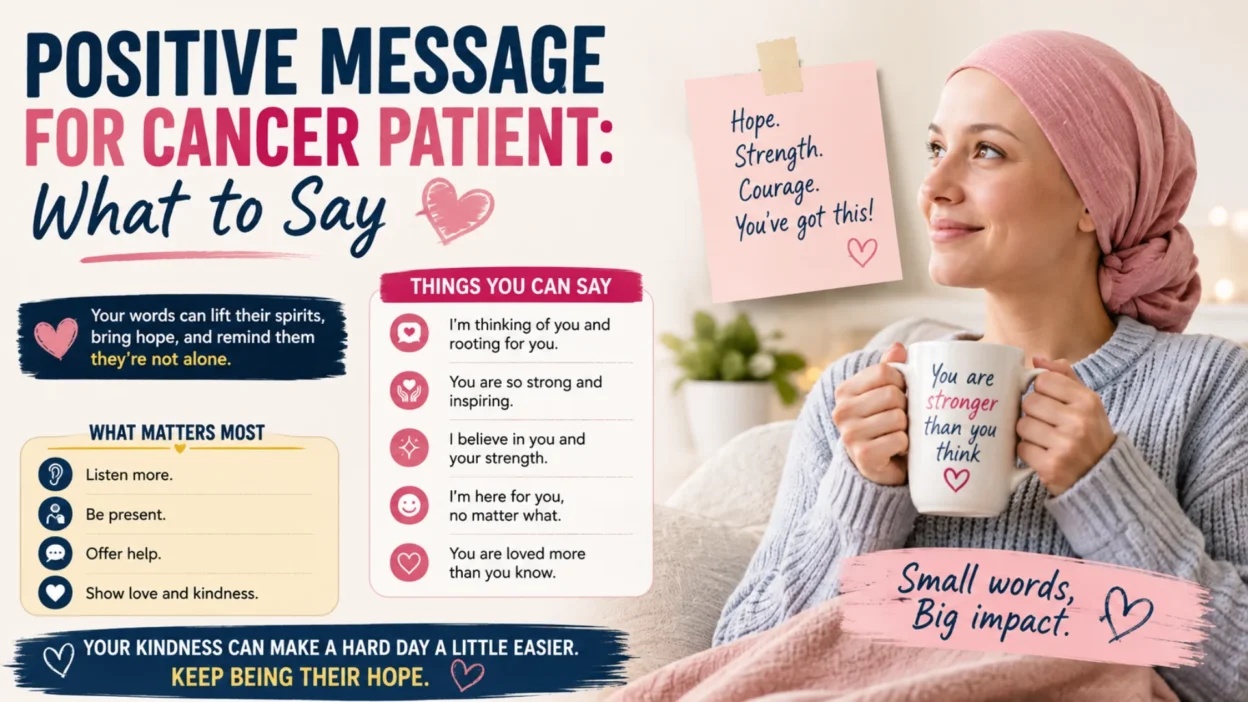
When someone you care about receives a cancer diagnosis, the impulse to send a positive message is natural. You want to lift their spirits, show you care, and offer hope. Yet finding the right words can feel overwhelming. A message that lands well can provide genuine comfort. A message that misses the mark, even with good intentions, can leave the recipient feeling dismissed or misunderstood. This guide will walk you through how to craft a positive message for a cancer patient that feels sincere, supportive, and appropriate for your relationship. You’ll find practical examples, phrases to avoid, and guidance on matching your words to the person’s emotional reality. By the end, you’ll have the confidence to reach out without fear of saying the wrong thing.
Why Positive Messages Matter for Cancer Patients
Cancer treatment is physically exhausting and emotionally draining. Patients often describe feeling isolated, even when surrounded by loved ones. A thoughtful message can break through that isolation. It reminds the person that they matter, that they’re seen, and that they’re not facing this alone. Research in psycho-oncology consistently shows that social support correlates with better emotional adjustment during treatment. That support doesn’t require grand gestures. Sometimes a short text or a brief note carries more weight than a long conversation. The key is authenticity. A positive message works when it acknowledges the difficulty of the situation while still offering genuine warmth and presence. It doesn’t pretend everything is fine. It simply says, “I’m here, and I care.”
Understanding What “Positive” Really Means in This Context
The word “positive” can be tricky. For some patients, positivity means optimism and hope. For others, it means toxic positivity—the pressure to appear cheerful when they’re actually struggling. A truly positive message doesn’t demand that the patient feel good. Instead, it creates space for whatever they’re feeling while reminding them they’re supported. According to guidance from Woman’s Hospital, comments like “Stay positive” or “You got this” can unintentionally minimize the patient’s reality. The person may feel they have to hide their fear or sadness to meet your expectations. A better approach is to validate their experience first, then offer support. “I know this is hard, and I’m here to help” is more genuinely positive than “Stay positive” because it acknowledges the truth without abandoning hope.
The Four Pillars of a Supportive Cancer Message
Effective messages for cancer patients tend to share four qualities. First, they acknowledge the situation without minimizing it. Second, they express care in a way that feels personal rather than generic. Third, they offer support that is specific and realistic. Fourth, they leave room for the patient to respond however they wish, or not respond at all. Messages that hit all four notes feel complete. You don’t need to write a paragraph. A few sentences can accomplish all four. For example: “I heard about your diagnosis. I’m so sorry you’re going through this. I’m bringing dinner on Thursday, and you don’t need to reply—just know I’m thinking of you.” That message acknowledges, expresses care, offers specific support, and removes the burden of a response.
Short Positive Messages for Cancer Patients: Ready-to-Use Examples
Sometimes you just need words that work. Here are examples grouped by tone and relationship. Adjust them to fit your situation.
Simple and warm:
“You’ve been on my mind a lot. Sending you strength and love.”
“Thinking of you today and always. You’re not alone in this.”
“I’m sorry you’re going through this. I’m here whenever you need.”
Encouraging without pressure:
“I can’t imagine how hard this is. You’re handling it with so much courage, even on the tough days.”
“One step at a time. I’ll be here for every one of them.”
“You don’t have to be strong all the time. Let others carry some of the weight.”
For a close friend or family member:
“I love you. Whatever you need, whenever you need it, I’m there.”
“This sucks. I’m not going anywhere. We’ll get through it together.”
“I’m angry with you. And I’m hopeful with you. And I’m here with you.”
For an acquaintance or colleague:
“I was sorry to hear about your diagnosis. Wishing you comfort and strength during treatment.”
“Please know the team is thinking of you. Let us know if there’s anything we can do.”
“Sending my best wishes for your treatment and recovery.”
These messages work because they don’t pretend to know exactly what the patient is feeling. They offer presence, not prescriptions.
What Not to Say: Phrases That Hurt Even When You Mean Well
Certain phrases appear in condolence and support messages so often that they’ve become automatic. Unfortunately, many of them cause more harm than comfort. Here’s a quick reference of what to avoid.
| Avoid This | Why It Hurts | Try This Instead |
|---|---|---|
| “Stay positive!” | Pressures the patient to suppress difficult emotions | “It’s okay to feel whatever you’re feeling” |
| “Everything happens for a reason” | Feels dismissive and preachy | “I don’t know why this is happening, but I’m here” |
| “You’re so brave” | Can feel like an expectation the patient can’t meet | “You’re going through something really hard” |
| “I know how you feel” | Assumes you understand their unique experience | “I can’t imagine what this is like for you” |
| “At least it’s a good cancer” | No cancer is “good” | “I’m so sorry you’re dealing with this” |
| “Let me know if you need anything” | Puts the burden on the patient | “I’m bringing dinner Wednesday—does that work?” |
| “Have you tried [alternative treatment]?” | Can feel like blaming the patient | “I trust your medical team to guide you” |
According to BC Cancer, phrases like “If anyone can beat this, you can” can make patients feel that dying or getting sicker means they didn’t fight hard enough. The principle is simple: focus on the patient’s reality, not on your own need to fix or comfort.
Matching Your Message to the Relationship
The tone and content of your message should reflect how well you know the person. What works for a sibling may feel intrusive from a coworker. A message to a close friend can be raw and emotional. A message to an acquaintance should be respectful and brief. If you’re sending a message on behalf of a team or organization, use collective language: “The whole team is thinking of you.” If you’re writing to a boss or someone you don’t know well, keep it simple: “I was saddened to hear about your diagnosis. Wishing you strength during treatment.” The key is calibration. Ask yourself how the person would feel receiving this message from you specifically.
When a Text Message Is Appropriate—and When It Isn’t
Text messages have become a normal part of communication, even in serious situations. For many cancer patients, a text is welcome because it’s low-pressure. They can read it when they have energy and respond when they’re ready. However, a text may feel too casual for certain relationships or circumstances. If you’re very close to the person, a phone call or a handwritten note might carry more weight. If the diagnosis is new and the patient is still processing, a text is often the gentlest option. According to guidance from By Your Side, even simple messages can mean a lot, but you should follow the patient’s lead in conversation. If they don’t respond, don’t take it personally. They may simply not have the energy.
The Difference Between Supporting and Cheerleading
One common mistake is treating a cancer diagnosis like a sports event that requires a cheerleader. “You can beat this!” and “Fight hard!” sound encouraging, but they frame recovery as a battle the patient must win through effort. If the cancer progresses despite their best efforts, they may feel they failed. A better approach is to support the person without making their outcome a measure of their willpower. Say “I’m here for you” rather than “You have to fight.” Say “I hope for the best” rather than “You will beat this.” This distinction matters because cancer outcomes are not determined by attitude alone.
Practical Support: Turning Words Into Action
A message becomes truly positive when it’s backed by action. Instead of saying “Let me know if you need help,” offer something specific. “I can pick up your kids from school on Tuesday.” “I’m dropping off a meal on Friday.” “I can sit with you during your next treatment if you’d like company.” According to Woman’s Hospital, empty offers of support can leave a loved one feeling even more alone. Specific offers remove the burden of asking. They also show that your words have weight. If you say you’ll do something, do it. Consistency over time matters more than a single grand gesture.
What to Do When You Don’t Know What to Say
The fear of saying the wrong thing often leads to silence. But silence can hurt more than imperfect words. If you’re unsure what to say, it’s okay to admit it. “I don’t know what to say, but I want you to know I care” is a complete and honest message. According to By Your Side, that exact phrase is one of the most supportive things you can say. You don’t need to have answers. You don’t need to fix anything. You just need to show up. Sometimes the most positive message is simply, “I’m here.”
Cultural and Generational Differences in Cancer Communication
How people talk about cancer varies widely across cultures and generations. In some cultures, open discussion of illness is expected. In others, it’s considered private or even taboo. Some patients appreciate religious references; others don’t share those beliefs. Older generations may prefer a formal card or a phone call. Younger patients may be more comfortable with a text or a direct message. If you’re unsure, err on the side of neutral language that focuses on care and presence rather than specific beliefs or expectations. You can always ask, “Would you like to talk about it?” and follow their lead.
Positive Messages for Specific Situations
Different moments in the cancer journey call for different messages. Here’s a quick guide.
After Diagnosis
“I’m so sorry. I’m here, and I’m not going anywhere.”
“I don’t have the right words, but I want you to know you’re not alone.”
Before Surgery or Treatment
“I’ll be thinking of you on Thursday. You’ve got a lot of people in your corner.”
“Sending you strength and calm. I’m here if you need to talk or if you just need quiet company.”
During a Hard Week
“This week sounds brutal. I’m bringing over dinner and a movie. No need to entertain me.”
“You don’t have to pretend to be okay. I’m here for the real version.”
After Treatment Ends
“How are you feeling about everything? There’s no right way to feel right now.”
“I’m proud of you. And I’m here for whatever comes next.”
When There’s No More Treatment
“I’m here. I love you. Whatever you need, I’m here.”
“I don’t know what to say except that I’m not leaving.”
Frequently Asked Questions About Positive Messages for Cancer Patients
What is the best thing to say to someone with cancer?
The best message acknowledges their situation, expresses care, and offers specific support. “I’m sorry you’re going through this. I’m bringing dinner Thursday. No need to reply.” Simple, honest, and actionable.
Is it okay to say “Stay positive” to a cancer patient?
It’s generally better to avoid it. That phrase can pressure the patient to suppress difficult emotions. Instead, say “It’s okay to feel however you’re feeling” or “I’m here for the hard days too.”
Should I send a text or call?
Follow the patient’s lead. A text is often welcome because it’s low-pressure. If you’re close and they’re up for it, a call can be meaningful. If they don’t respond, don’t take it personally.
What if I say the wrong thing?
It happens. If you realize you said something hurtful, a brief correction can help: “I’m sorry—that came out wrong. I’m just so sorry you’re dealing with this.” Acknowledging the misstep shows humility and care.
How often should I check in?
Consistency matters more than frequency. A brief message every week or two is often better than daily texts that feel overwhelming. Pay attention to how they respond and adjust accordingly.
What if they don’t want to talk about cancer?
That’s fine. Talk about other things. Share a funny story. Ask about their favorite show. Let them decide when and if they want to discuss their diagnosis.
Can I send a positive message if I don’t know the person well?
Yes. Keep it brief and respectful. “I was sorry to hear about your diagnosis. Wishing you strength during treatment.” That’s enough.
What should I avoid saying?
Avoid “Everything happens for a reason,” “You’re so brave,” “I know how you feel,” and “Let me know if you need anything.” These phrases can feel dismissive or burdensome.
Final Thoughts: Presence Over Perfection
The most positive message for a cancer patient isn’t the one with the perfect words. It’s the one that shows up. It says, “I see you. I care. I’m here.” You don’t need to be eloquent. You don’t need to have answers. You just need to be willing to step into a hard moment and stay there. That willingness, expressed in a short text or a simple note, can mean more than any carefully crafted speech. So send the message. Offer the help. Show up. And if you say the wrong thing, apologize and try again. What matters most is that you didn’t stay silent.

Serhii Dunev is a passionate content creator dedicated to crafting meaningful texts, messages, and word inspirations. He aims to help people express their emotions clearly through simple and impactful words.