You sit down to write a Thanksgiving message, and suddenly your mind goes blank. The cursor blinks. The card sits there. You want to say something warm and genuine, but “Happy Thanksgiving” feels too plain. Meanwhile, the person you’re writing to deserves more than a generic line they’ve seen a hundred times before. Sound familiar? You’re not alone. Millions of people stare at blank cards and empty text boxes every November, unsure how to put gratitude into words.
The good news is that a great Thanksgiving message doesn’t need to be poetic or perfect. It needs to sound like you. It needs to be specific, warm, and honest. Whether you’re texting a best friend, writing a card to your mom, or sending a quick note to a coworker, the right words are closer than you think. This guide walks through real examples, practical tips, and the mistakes that make messages feel hollow, so you can send something that actually lands.
What Makes a Thanksgiving Message Work
A Thanksgiving message works when it feels personal rather than performative. Most people can spot a copy-pasted greeting from a mile away. The ones that stick are the ones that mention something real: a shared memory, a specific quality you admire, or a small moment from the past year that meant something.
Specificity is the secret ingredient. Instead of writing “Thank you for everything,” try “Thank you for driving me to practice every Tuesday, even when you were exhausted.” The first line could be written to anyone. The second line could only be written to that person. That’s what makes a message memorable.
Length matters less than sincerity. A two-line text can hit harder than a full paragraph if it’s honest. So don’t stress about word count. Focus on making one genuine observation, and the rest will follow naturally.
General Thanksgiving Messages for Anyone
Sometimes you need a message that works for almost anyone. These are the ones you can send to an acquaintance, a neighbor, or someone you appreciate but don’t know deeply. General messages should be warm without being overly intimate.
Here are some reliable options:
- Wishing you a Thanksgiving filled with good food, good company, and a heart full of gratitude.
- May your table be full, your heart fuller, and your leftovers plentiful.
- Grateful for the people who make life feel lighter. Happy Thanksgiving.
- Wishing you peace, comfort, and a day that reminds you how much good surrounds you.
- Hope your Thanksgiving is full of quiet moments, loud laughter, and everything in between.
These messages work because they’re inclusive. They don’t assume anything about the recipient’s family situation, beliefs, or traditions. They simply offer warmth. For casual acquaintances or neighbors, that’s usually exactly right.
Thanksgiving Messages for Family
Family messages carry more weight because the relationships run deeper. With family, you can be more specific, more vulnerable, and more direct about what someone means to you.
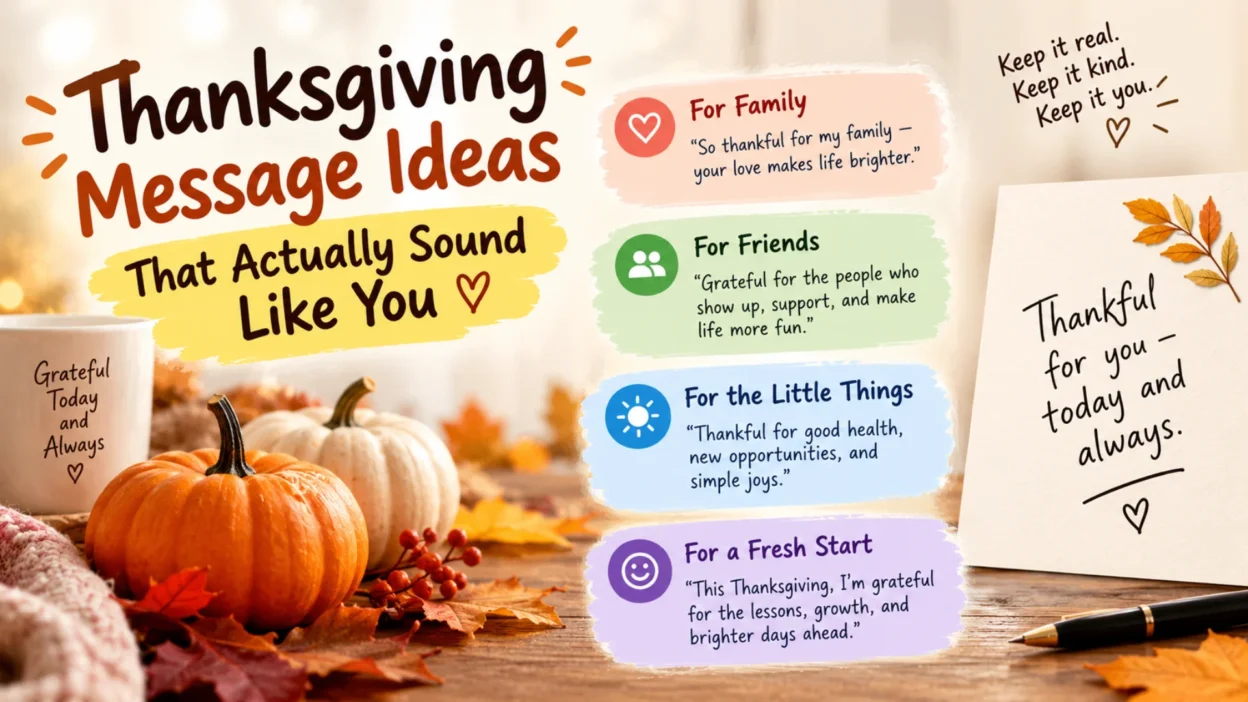
For parents, the best messages often focus on gratitude for things that went unnoticed at the time. For example: “Thank you for every meal you made when I was too busy to notice. I notice now. Happy Thanksgiving.” For siblings, a touch of humor usually works better than sentimentality: “Grateful for a sibling who knows all my worst moments and still shows up for dinner. Happy Thanksgiving.”
For grandparents, a message that honors their role in your life tends to land well. Something like: “Thankful for the stories you tell and the lessons you’ve passed down. Happy Thanksgiving.” If you live far apart, acknowledging the distance adds sincerity: “Wish I could be at the table with you today. Thinking of you and grateful for you, even from here.”
Thanksgiving Messages for Friends
Friends are the family you choose, and your message should reflect that. Friendsgiving has become a major tradition, and a good message for a friend often blends humor with genuine appreciation.
For a close friend: “Grateful for every chaotic, ridiculous, wonderful part of our friendship. Happy Thanksgiving.” For a friend who’s been through a tough year: “Thankful you’re still standing and still laughing. That takes strength. Happy Thanksgiving.” For a friend you don’t see often: “Distance doesn’t change how grateful I am for you. Happy Thanksgiving.”
Funny messages work especially well with friends. Lines like “May your family drama be short and your naps be long” or “Grateful for you, and for the fact that you never judge how many times I go back for seconds” keep things light while still expressing real appreciation.
Thanksgiving Messages for Coworkers and Bosses
Workplace messages need a different tone. They should be warm but professional, appreciative but not overly personal. The goal is to strengthen relationships without crossing boundaries.
For a coworker: “Grateful to work alongside someone as dependable as you. Happy Thanksgiving.” For a boss: “Thank you for your leadership and support this year. Wishing you a peaceful Thanksgiving.” For a team: “Thankful for the hard work and collaboration you all bring every day. Enjoy the break.”
A useful rule for workplace messages is to keep them brief. Long, emotional messages can feel awkward in professional settings. A short, specific note of appreciation often means more than a lengthy paragraph. If you’re sending a message to a remote team, acknowledging the distance can add warmth: “Even though we’re spread out, I’m grateful for how connected this team stays.”
Romantic Thanksgiving Messages for a Partner
Romantic messages should feel personal, not performative. The best ones focus on specific qualities or moments rather than generic declarations of love.
For a boyfriend or girlfriend: “Grateful for your laugh, your patience, and the way you make ordinary days feel special. Happy Thanksgiving.” For a spouse: “Thankful for another year of building a life together. You make the hard days easier and the good days better. Happy Thanksgiving.” For someone you’re dating casually: “Grateful I get to spend this holiday with you. Happy Thanksgiving.”
If you want to add humor, romantic messages can be playful too. “Grateful for you, and for the fact that you’ll still love me after I eat three plates of food” works well for couples who joke around together.
Funny Thanksgiving Messages That Still Feel Warm
Funny messages are tricky. They need to be genuinely funny without crossing into mean-spirited territory. The best ones poke fun at the holiday itself: the food, the naps, the family dynamics, and the stretchy pants.
Some reliable options:
- May your turkey be tender, your gravy smooth, and your relatives chill.
- Eat, nap, repeat. The real Thanksgiving tradition.
- Wishing you more laughs than leftovers.
- May your family photo turn out on the first try.
- Grateful for food, naps, and Wi-Fi. In that order.
These lines work because they’re relatable. Everyone knows the chaos of a Thanksgiving gathering, and laughing about it together is a form of connection. Just avoid jokes that target specific family members or touch on sensitive topics. The goal is shared humor, not awkwardness.
Religious and Spiritual Thanksgiving Messages
For people of faith, Thanksgiving messages often include gratitude to God. These messages can be deeply meaningful when they’re sincere and specific.
A simple option: “Grateful for God’s grace and the blessings He’s given our family this year. Happy Thanksgiving.” For a prayer-focused message: “Thanking God today for His goodness, His provision, and the people He’s placed in my life. Wishing you a blessed Thanksgiving.”
These messages work best when they reflect your own faith authentically. If you’re not religious, there’s no need to force spiritual language into your message. Gratitude can be expressed without religious framing, and it’s equally meaningful.
Thanksgiving Messages for Cards vs. Texts: What Changes
The medium shapes the message. A text is quick, casual, and often sent on the day itself. A card is slower, more intentional, and usually arrives before the holiday.
Text messages should be short. A sentence or two is plenty. “Happy Thanksgiving! Grateful for you today and always” works perfectly as a text. Cards give you more room to elaborate. You can write a few sentences, mention a specific memory, and sign off with warmth.
Timing also matters. Cards sent in the week before Thanksgiving feel more intentional than cards sent on the day. Texts sent on Thanksgiving morning feel timely and thoughtful. If you’re sending a digital card or message to someone in a different time zone, sending it the night before ensures it arrives when they wake up.
Common Mistakes That Make Messages Feel Hollow
Even well-intentioned messages can fall flat. Here are the mistakes to avoid.
Being too generic. “Happy Thanksgiving” alone is fine for acquaintances, but for people you care about, it feels like a missed opportunity. Add one specific thing you’re grateful for.
Making it about you. A Thanksgiving message should center the recipient. Instead of “I’m so grateful for everything I have,” try “I’m grateful for you and the way you show up.”
Overloading with clichés. Phrases like “blessings” and “abundance” are fine, but they lose meaning when every message uses them. Say what you actually feel in your own words.
Forgetting to proofread. A typo in a heartfelt message isn’t the end of the world, but a quick check shows you cared enough to get it right.
Sending the same message to everyone. Mass-copying a message is tempting when you have a long list. But even small tweaks, like changing the recipient’s name and adding one specific detail, make a huge difference.
How to Personalize Any Template
Templates are useful starting points, but they should never be the final product. To personalize a Thanksgiving message, add one of these elements:
- A shared memory: “I still think about that road trip we took last summer.”
- A specific quality: “Your patience with me this year meant more than you know.”
- A small moment: “Thank you for the coffee you brought me when I was overwhelmed.”
- A future intention: “Looking forward to more dinners and more ridiculous conversations.”
These additions take a template from generic to genuine in just a few words. The recipient will feel the difference immediately.
When to Send Your Thanksgiving Message
Timing depends on the relationship and the medium. For close friends and family, sending a message on Thanksgiving morning works well. It arrives as they’re starting their day, and it sets a warm tone. For cards, aim to send them at least a week before the holiday. For coworkers, a message on the last workday before the break feels appropriate.
If you’re unsure, earlier is usually better than later. A message that arrives after Thanksgiving dinner has already ended feels like an afterthought. A message that arrives the day before feels thoughtful and proactive.
FAQs
What should I write in a Thanksgiving message?
Focus on gratitude and specificity. Mention one thing you appreciate about the person, and keep the tone warm and genuine. A short, specific message often means more than a long, generic one.
How do I write a Thanksgiving message to my boss?
Keep it professional and brief. Thank them for their leadership or support, and wish them a peaceful holiday. Avoid overly personal language or inside jokes that could feel unprofessional.
Can I send a Thanksgiving message on social media?
Yes. Social media messages work well for broad audiences, but they’re less personal than texts or cards. If you’re posting publicly, keep it general. Save specific, heartfelt messages for private channels.
What’s a good short Thanksgiving message?
“Grateful for you today and always. Happy Thanksgiving.” Or simply: “Thankful for you. Happy Thanksgiving.” Short messages work best when they’re sincere.
Is it okay to send a funny Thanksgiving message?
Absolutely, as long as the humor is kind. Jokes about food, naps, and holiday chaos are usually safe. Avoid jokes that target specific people or sensitive topics.
Should I send Thanksgiving messages to coworkers?
Yes, if you have a good relationship with them. Keep the message warm but professional. A brief note of appreciation can strengthen workplace bonds without feeling intrusive.
How do I make a Thanksgiving message feel personal?
Add one specific detail: a shared memory, a quality you admire, or a moment from the past year that meant something. Specificity is what separates a genuine message from a generic one.
When is the best time to send a Thanksgiving message?
For texts, Thanksgiving morning works well. For cards, aim to send them at least a week before the holiday. For coworkers, the last workday before the break is ideal.
Final Thoughts
A Thanksgiving message doesn’t need to be perfect. It needs to be real. The best messages are the ones that sound like you, mention something specific, and make the other person feel seen. Whether you’re writing a quick text or a long card, the effort itself is the gift.
So don’t overthink it. Pick a message that feels right, add a personal detail, and send it. The people in your life will appreciate the thought far more than the perfect phrasing. And if you’re still stuck, remember: gratitude doesn’t require poetry. It just requires honesty.

Serhii Dunev is a passionate content creator dedicated to crafting meaningful texts, messages, and word inspirations. He aims to help people express their emotions clearly through simple and impactful words.