December rolls around, and your inbox fills with festive greetings. You want to send your own, but the pressure to get it right can be surprisingly high. A happy holidays message is more than a seasonal formality. It’s a chance to connect, express gratitude, and spread warmth during a busy time of year. Whether you’re texting a friend, emailing a client, or writing a card to a relative, the words you choose matter. This guide will help you craft messages that feel genuine, inclusive, and appropriate for any recipient. You’ll find ready-to-use examples, tips for personalization, and guidance on navigating cultural sensitivities. By the end, you’ll be able to send a happy holidays message that lands well and feels true to you.
What Exactly Is a Happy Holidays Message?
A happy holidays message is a greeting that acknowledges the winter holiday season without tying itself to one specific celebration. It’s a broad, inclusive phrase that covers Christmas, Hanukkah, Kwanzaa, New Year’s, and other festivities that occur around the same time. The phrase “happy holidays” gained popularity as a way to respect the diversity of beliefs and traditions. Instead of assuming someone celebrates Christmas, you offer a general wish for joy and peace. A happy holidays message can be as short as two words or as long as a heartfelt paragraph. It can be sent via text, email, social media, or a traditional card. The common thread is the intent: to share goodwill and acknowledge the season.
Why “Happy Holidays” Works Better Than You Might Think
Some people worry that “happy holidays” sounds generic or politically correct. In reality, it’s a practical and thoughtful choice. If you don’t know a person’s religious background, “happy holidays” avoids making assumptions. It’s also inclusive of people who celebrate non-religious traditions or no holidays at all. According to etiquette experts, the phrase is widely accepted in professional and social settings. It’s not about erasing Christmas. It’s about broadening the circle of goodwill. A well-crafted happy holidays message can feel just as warm as a specific “merry Christmas” greeting, especially when you add personal details. The key is sincerity. A generic message sent to everyone feels hollow, but a personalized one carries real weight.
The Core Elements of a Memorable Happy Holidays Message
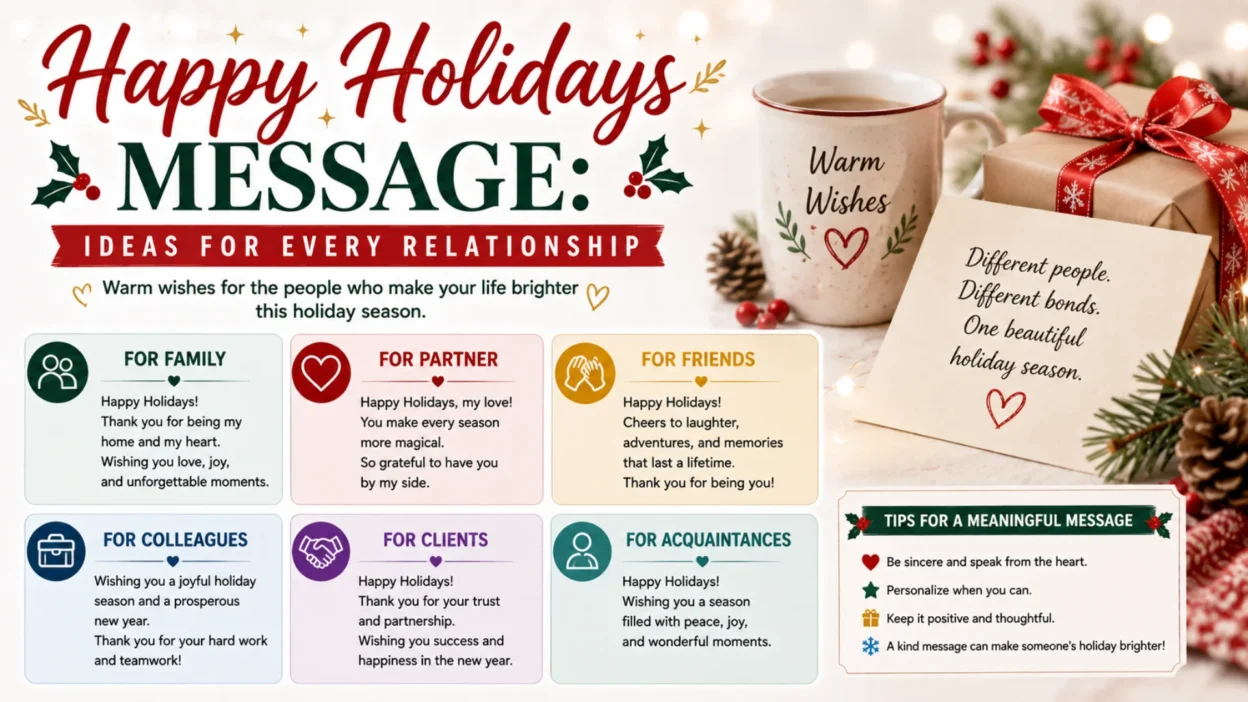
Great holiday messages share a few common traits. First, they’re personal. Even a short note that mentions a shared memory or inside joke stands out. Second, they’re warm. The tone should be friendly, not formal or stiff. Third, they’re concise. Holiday inboxes are crowded, so respect the recipient’s time. Fourth, they’re inclusive. Unless you’re certain of someone’s traditions, stick with “happy holidays” or a neutral phrase like “season’s greetings.” Fifth, they offer genuine wishes. Instead of just saying “happy holidays,” add a specific hope: “I hope you get to relax and enjoy time with your family.” These five elements turn a routine greeting into something meaningful.
Short Happy Holidays Messages for Texts and Social Media
Sometimes you just need a quick message that still feels thoughtful. Here are examples for texts, DMs, and social media posts.
“Happy holidays! Hope your season is full of good food and even better company.”
“Wishing you a happy holiday season and a wonderful new year.”
“Happy holidays! Thinking of you and sending warm wishes your way.”
“Hope your holidays are merry, bright, and full of your favorite people.”
“Season’s greetings! May your days be filled with joy and your phone be filled with good news.”
“Happy holidays! Here’s to a restful break and a fantastic year ahead.”
“Wishing you peace, joy, and plenty of downtime this holiday season.”
These short messages work because they’re friendly and easy to read. They don’t demand a response, but they let the recipient know you’re thinking of them.
Heartfelt Happy Holidays Messages for Close Friends and Family
For the people you’re closest to, you can be more emotional and specific. These messages work well for cards, long texts, or email.
“This year reminded me how lucky I am to have you in my life. Happy holidays, and thank you for everything.”
“Wishing you a holiday season as wonderful as you are. I’m so grateful for our friendship.”
“Happy holidays! I hope this season brings you rest, joy, and everything you’ve been hoping for.”
“Thinking of all the holidays we’ve shared and looking forward to many more. Happy holidays to you and your family.”
“You make every season brighter. Wishing you the happiest of holidays and a beautiful new year.”
“May your holidays be filled with love, laughter, and the people who matter most. I’m so glad you’re one of them.”
For family, you can add a memory: “Remember that time we burned the holiday cookies? Still one of my favorite memories. Happy holidays!” Personal touches like that make the message unforgettable.
Professional Happy Holidays Messages for Coworkers and Clients
Workplace holiday messages need a different tone. You want to be warm but not overly familiar. Avoid inside jokes or emotional language that might feel out of place. Here are some reliable options.
For coworkers:
“Happy holidays! Wishing you a restful break and a great start to the new year.”
“Thanks for being such a great teammate this year. Happy holidays to you and your family.”
“Season’s greetings! Hope you get some well-deserved time off.”
For clients or business contacts:
“Wishing you a happy holiday season and a prosperous new year. Thank you for your continued partnership.”
“Happy holidays from all of us. We appreciate your trust and look forward to working with you in the year ahead.”
“Season’s greetings! May your holidays be filled with joy and your new year with success.”
For a boss or senior leader:
“Happy holidays! Thank you for your leadership this year. Wishing you and your family a wonderful season.”
“Season’s greetings and best wishes for a happy, healthy new year.”
These messages strike the right balance. They’re respectful, positive, and free of assumptions about religious beliefs.
Happy Holidays Messages for Specific Holidays
While “happy holidays” covers the whole season, sometimes you want to acknowledge a specific celebration. Here are examples for the major winter holidays.
Christmas:
“Merry Christmas! Wishing you a day full of love, laughter, and maybe a little too much dessert.”
“Wishing you a Christmas filled with peace, joy, and everything that makes you smile.”
Hanukkah:
“Happy Hanukkah! May your eight nights be filled with light, love, and latkes.”
“Wishing you a joyful Hanukkah and a season full of blessings.”
Kwanzaa:
“Happy Kwanzaa! Wishing you a celebration full of unity, purpose, and community.”
“May your Kwanzaa be filled with warmth and meaning.”
New Year:
“Happy New Year! Here’s to fresh starts and good surprises.”
“Wishing you a new year full of health, happiness, and everything you’re working toward.”
Diwali (though not in winter, sometimes overlaps):
“Happy Diwali! May your festival of lights bring you joy and prosperity.”
Lunar New Year (varies in date but often in winter):
“Happy Lunar New Year! Wishing you good fortune and happiness in the year ahead.”
How to Personalize a Happy Holidays Message Without Overdoing It
Personalization is what separates a forgettable greeting from a memorable one. But you don’t need to write a novel. One or two specific details are enough. Mention a shared memory: “I still think about that holiday party where you told that story about the taxi.” Reference something you know about their plans: “Hope your trip to see your parents is wonderful.” Or acknowledge a tough year: “I know this year has been hard. Wishing you extra peace this holiday season.” Avoid prying into personal matters or making the message about you. The goal is to show you see the recipient as an individual, not just a name on a list.
Cultural Sensitivity: Navigating Different Traditions
The winter season is a tapestry of different beliefs and customs. A happy holidays message should respect that diversity. If you know a person’s specific tradition, you can use the appropriate greeting. If you’re unsure, stick with “happy holidays” or “season’s greetings.” Avoid mixing traditions in a way that feels careless, like saying “Merry Christmas and Happy Hanukkah” to someone who celebrates neither. Also be mindful of cultural differences in how holidays are celebrated. Some people don’t celebrate any winter holidays for personal or religious reasons. For them, a simple “Hope you have a restful season” works well. When in doubt, a warm, neutral message is always safe.
Common Mistakes to Avoid in Holiday Messages
Even well-intentioned messages can miss the mark. Here are pitfalls to steer clear of.
| Mistake | Why It’s a Problem | Better Approach |
|---|---|---|
| Sending a generic message to everyone | Feels impersonal and lazy | Add a personal detail for each recipient |
| Assuming everyone celebrates Christmas | Can alienate non-Christians | Use “happy holidays” or ask about their traditions |
| Writing a long, emotional essay | Can feel overwhelming during a busy season | Keep it to a few sentences unless it’s a close relationship |
| Including political or controversial content | Ruins the festive mood | Stick to neutral, positive wishes |
| Forgetting to proofread | Typos undermine sincerity | Read your message aloud before sending |
| Sending too late | Misses the window of relevance | Aim for early to mid-December |
The Best Time to Send Happy Holidays Messages
Timing matters. Send your messages too early, and they might get lost in the pre-holiday rush. Send them too late, and they feel like an afterthought. The sweet spot is usually the first two weeks of December. For business contacts, aim for early December before inboxes get clogged. For friends and family, you can send closer to the holiday itself. If you’re sending a New Year’s message, the last week of December or the first few days of January works well. Avoid sending on major holidays themselves, as people are often busy with family. A message that arrives a few days before feels thoughtful without being intrusive.
Happy Holidays Messages for Social Media Posts
Social media holiday greetings are a different beast. They’re public, so they need to be broadly appealing. You can’t personalize a post the way you can a text. Instead, focus on universal themes: gratitude, hope, and community. Here are some caption ideas.
“Wishing everyone a happy holiday season filled with love and light.”
“From our family to yours, happy holidays!”
“May your feed be merry and bright. Happy holidays!”
“Grateful for this community. Wishing you all a wonderful holiday season.”
“Sending warm wishes to everyone celebrating this time of year. Happy holidays!”
Keep social posts short and visually appealing. Pair them with a festive photo or graphic.
When to Use “Happy Holidays” vs. “Merry Christmas”
This is a sensitive topic for some, so it’s worth addressing directly. If you know someone celebrates Christmas, “merry Christmas” is perfectly appropriate and often appreciated. If you’re unsure, “happy holidays” is the safer, more inclusive choice. In professional settings, “happy holidays” is generally preferred because it doesn’t assume anything about a client’s or coworker’s beliefs. In personal settings, you can use whatever feels natural for the relationship. There’s no universal rule. The key is to be respectful and considerate. If someone corrects you or expresses a preference, honor it. A happy holidays message is about goodwill, not about making a point.
Frequently Asked Questions About Happy Holidays Messages
Is it okay to say “happy holidays” instead of “merry Christmas”?
Yes. “Happy holidays” is an inclusive greeting that covers multiple celebrations. It’s widely accepted and respectful.
What if I don’t know which holiday someone celebrates?
Use “happy holidays” or “season’s greetings.” Both are neutral and safe. You can also simply say, “I hope you have a wonderful holiday season.”
Should I send holiday messages to coworkers?
Yes, it’s common and appreciated. Keep the tone professional and avoid overly personal language. A short “happy holidays” message is always appropriate.
Can I send a happy holidays message after Christmas?
Yes, if you’re referring to the broader holiday season, including New Year’s. If you mean Christmas specifically, it’s better to send before or on the day.
How do I personalize a holiday message without being intrusive?
Mention a shared memory, a hobby, or a general hope for their well-being. Avoid asking about personal plans or bringing up sensitive topics.
Is it better to send a text or a card?
It depends on the relationship. Texts are fine for casual friends and coworkers. Cards are more meaningful for close family and friends, especially older relatives.
What’s a good happy holidays message for a client?
“Wishing you a happy holiday season and a prosperous new year. Thank you for your continued partnership.” That’s professional, warm, and safe.
Should I include emojis in my holiday message?
If you’re texting a friend, emojis can add warmth. In professional emails, use them sparingly or not at all. Match the tone to the relationship.
Final Thoughts: Send the Message, Skip the Stress
The perfect happy holidays message doesn’t exist. What matters is that you send something. A short, sincere note beats a perfectly crafted message you never send. Think about the people in your life and what they’d appreciate hearing. Keep it simple. Be warm. Be inclusive. And don’t overthink it. The holiday season is about connection, not perfection. So pick up your phone, open your email, or grab a card. Write a few words from the heart. That’s all it takes to make someone’s day a little brighter.

Serhii Dunev is a passionate content creator dedicated to crafting meaningful texts, messages, and word inspirations. He aims to help people express their emotions clearly through simple and impactful words.