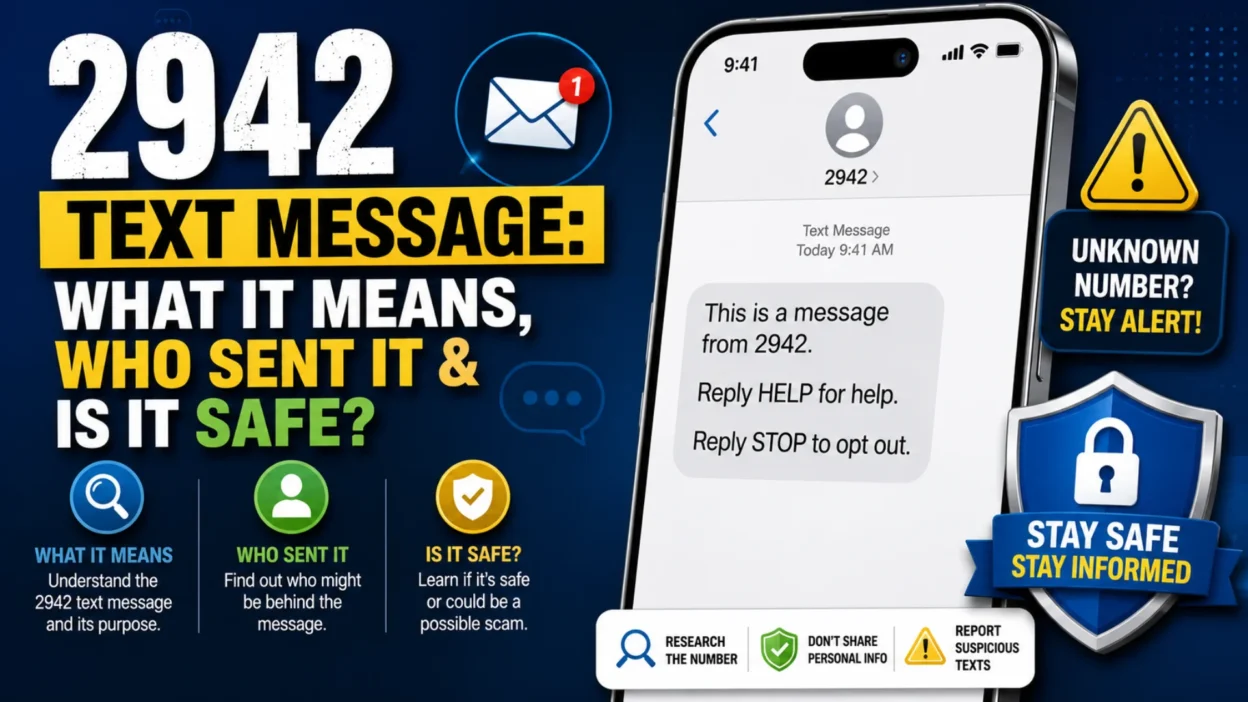
If you received a 2942 text message, you may be wondering who sent it, why you received it, and whether you should trust it. A current public SMS lookup identifies 2942 as a sender ID associated with messaging activity in the Dominican Republic, while another public SMS record shows 2942 being used as a verification code in a WePlay message. Because short codes and sender IDs can be used by different messaging services, the number alone isn’t enough to identify the exact sender. This guide explains what 2942 can mean, how to recognize a legitimate message, and what to do if the text looks suspicious.
What Is a 2942 Text Message?
A 2942 text message is an SMS that displays 2942 as the sender or contains 2942 as a verification code. Public SMS data shows activity associated with the sender ID 2942 in the Dominican Republic, although the available information doesn’t establish one universal company or service behind every message using those four digits.
The number can also appear inside an automated verification message. For example, a public SMS archive records a WePlay message containing the verification code 2942 and instructing the recipient not to disclose it.
Therefore, the most useful clue is the wording of the message, not simply the number 2942.
Why Did I Receive a Text From 2942?
There are several possible explanations for an unexpected message from 2942.
You may have requested a verification code, signed into an online service, created an account, or triggered an automated security check. In that situation, the four-digit number may be part of a one-time verification process.
A public SMS record specifically shows 2942 being used as a WePlay verification code. However, that doesn’t prove every 2942 message comes from WePlay.
You could also receive an unwanted message because someone entered your phone number incorrectly. In some cases, unsolicited messages may also be promotional or suspicious.
Is 2942 a Verification Code?
It can be. Publicly available SMS data shows a WePlay verification message containing 2942 and stating that the code should not be disclosed.
If you received a message that says something like “your verification code is 2942,” first ask yourself whether you recently requested that code.
If you did request it, enter the code only in the official app or website where you initiated the login or registration.
If you didn’t request it, don’t share the code with anyone. An unexpected verification code can mean that someone entered your number while attempting to access or create an account.
Does 2942 Belong to WePlay?
There is evidence that 2942 has appeared as a WePlay verification code, but that is different from proving that 2942 is permanently assigned to WePlay as a sender.
A public SMS archive records WePlay messages containing 2942 and other temporary verification codes. Verification codes are typically generated dynamically, so the presence of 2942 in a message should be interpreted according to the complete SMS.
If the message claims to be from WePlay, verify the request through the official service rather than relying on the number alone.
Is a 2942 Text Message a Scam?
There isn’t enough reliable evidence to say that every 2942 text message is a scam.
A public sender lookup currently describes 2942 as having business-related user reports and identifies activity in the Dominican Republic. Separately, public SMS records show the number appearing in a legitimate-looking WePlay verification message.
These findings show why the content of the text matters.
A message becomes more concerning when it asks you to click an unfamiliar link, provide a password, send money, reveal a verification code, or urgently confirm sensitive information.
How to Tell If a 2942 Text Is Legitimate
Start by checking whether you actually requested the action described in the message.
If you recently created an account or attempted to sign in, a verification message may make sense. If you haven’t done anything that would trigger a code, don’t assume the message is meant for you.
Next, check the sender’s wording. Legitimate automated messages normally explain what the code is for without demanding unnecessary personal information.
Finally, don’t follow an unexpected link just because the message contains a familiar company name. Open the official app or website separately and check your account there.
What Should You Do If You Didn’t Request the Code?
If you receive a 2942 verification code that you didn’t request, don’t share it with anyone.
Someone may have entered your phone number accidentally, or they may be attempting to sign into an account associated with your number.
The safest response is to ignore the code unless you recognize the activity. If you repeatedly receive codes that you didn’t request, review the relevant account’s security settings and change your password if appropriate.
Most importantly, never send a one-time code to a person who contacts you and asks for it.
What If Someone Asks for Your 2942 Code?
Don’t give it to them.
Verification codes are designed to confirm access to an account, device, or phone number. A person asking you to forward the code may be attempting to complete an authentication process using your number.
This warning applies even if the person claims to be a friend, employee, customer-service representative, or account specialist.
If you need help with an account, contact the service through its official app or website instead.
What If the 2942 Message Contains a Link?
Treat an unexpected link carefully.
A text may use urgent language to encourage you to click immediately. For example, it might claim that your account is locked, your payment failed, or your information needs verification.
Don’t click the link simply because the message displays a recognizable sender.
Instead, open the official service independently. If there is a genuine account problem, you should be able to find information about it after signing in through the legitimate website or app.
What If You Already Clicked the Link?
If you clicked the link but didn’t enter any information, close the page and avoid interacting with it further.
If you entered a password, change that password through the legitimate website. If you reused the same password elsewhere, update those accounts too.
If you entered payment or banking information, contact your financial institution through its official contact method.
If you downloaded an unfamiliar application or file, don’t open it again. Review your device and remove anything you don’t recognize.
The correct response depends on what happened after the link was opened.
Should You Reply to 2942?
Don’t automatically reply to an unexpected 2942 message.
If the text is a legitimate verification message that you requested, you generally don’t need to reply. Simply use the code where you initiated the sign-in or registration process.
If the message is unsolicited or suspicious, avoid interacting with it until you’ve verified the sender.
A suspicious text doesn’t become legitimate merely because it asks you to reply with a simple word such as “YES.”
Can 2942 Texts Be Spam?
Yes, an unexpected message can be unwanted even when the sender ID itself isn’t proven fraudulent.
Public lookup information shows user-reported activity associated with 2942, including business-related classifications, but the available data doesn’t provide enough evidence to label every message from the sender as spam.
The safest approach is to evaluate the specific message.
If you never signed up for the service, don’t recognize the company, and weren’t expecting the communication, treat it cautiously.
2942 Text Message Red Flags
Certain features should make you pause before responding.
A message is more suspicious when it creates extreme urgency, asks for sensitive information, includes an unfamiliar website, or promises an unexpected reward.
Be particularly careful if it asks for:
- Passwords
- Banking information
- Credit-card details
- One-time verification codes
- Security answers
- Personal identification information
- Cryptocurrency or other payments
Legitimate services generally don’t need you to send sensitive credentials through an unexpected text conversation.
2942 Verification Code vs. 2942 Sender
These two situations are easy to confuse.
A 2942 sender means that your phone displays 2942 as the SMS sender ID.
A 2942 verification code means the number itself is part of the message content and is being used to authenticate an action.
For example, a message could display a company name as the sender while saying that your verification code is 2942.
Therefore, don’t assume that the number inside a text is necessarily the sender.
What Does 2942 Mean in a WePlay Text?
Public SMS records show a WePlay message in which 2942 was used as a temporary verification code. The message also warned the recipient not to disclose the code.
If you received a similar message, consider whether you recently attempted to use WePlay.
If you didn’t, don’t share the code or attempt to use it through an unfamiliar website. Instead, access the service independently and review your account activity.
Could Someone Be Trying to Access My Account?
An unexpected verification code can sometimes indicate that someone entered your phone number while attempting to sign in or register.
However, receiving a code doesn’t automatically mean the person successfully accessed your account.
If the code is required to complete authentication and you don’t share it, the person may not be able to complete that step.
For additional protection, use a strong password and enable available security features on the relevant account.
What If I Keep Receiving 2942 Messages?
Repeated unexpected messages deserve more attention.
First, determine whether the messages come from the same service. Read the sender name and wording carefully.
Next, review accounts that use your phone number for authentication. Look for unfamiliar login attempts or security notifications.
If the messages continue and you don’t recognize the service, use your phone’s spam-reporting and blocking tools where appropriate.
You can also contact your mobile carrier or the relevant service through an independently verified support channel.
Should You Block 2942?
Blocking may make sense if the messages are unwanted and continue after you’ve verified that you don’t need them.
However, blocking a sender isn’t necessary simply because you received one legitimate verification code.
If you are expecting security messages from a service, blocking the sender could prevent future authentication or account notifications.
Therefore, identify the source before making a permanent blocking decision.
How to Report a Suspicious 2942 Text
If the message appears to be spam, phishing, or fraud, use the reporting tools available on your phone.
Many messaging apps provide options such as Report Spam, Report Junk, or Block.
If the text involves financial fraud, identity theft, or an attempted account takeover, keep a copy of the message and report the incident through the relevant organization’s official security channel.
Don’t use contact information contained in the suspicious text. Find the organization’s official support details independently.
2942 Text Message on iPhone
On an iPhone, an unexpected text can be reviewed through the Messages app. Depending on your iOS version and message type, Apple provides options for reporting unwanted messages and blocking senders.
Before deleting the message, consider taking a screenshot if you may need it as evidence.
If the text contains a suspicious link, don’t open it simply to investigate. Use the organization’s official app or website instead.
2942 Text Message on Android
Android phones can also provide spam detection and reporting features, although the exact options vary by manufacturer and messaging application.
If your phone identifies the message as spam, review the warning before interacting with it.
You can usually block or report unwanted senders directly through the messaging application.
Again, the sender number alone shouldn’t determine whether you trust the message.
Why Do Companies Send Verification Codes by Text?
SMS verification gives services a way to confirm that a person has access to a particular phone number.
A service may send a temporary code after account registration, login attempts, password recovery, or other security actions.
The code normally expires after a short period. That’s why you should never share it with another person.
The appearance of a verification code doesn’t necessarily mean something is wrong. The important question is whether you initiated the action that triggered it.
Can a Verification Code Expire?
Yes. Many authentication systems make codes temporary.
The public WePlay SMS example containing 2942 explicitly describes the code as valid for only a limited period and warns users not to disclose it.
If you receive an unexpected code, allowing it to expire is generally safer than attempting to use it somewhere you don’t recognize.
What If You Accidentally Entered 2942 Somewhere?
If you entered the code into the official service you were trying to access, there may be nothing to worry about.
If you entered it into an unfamiliar website or gave it to another person, take the situation more seriously.
Change the associated account password through the official service and review recent account activity. If financial or sensitive information was also exposed, contact the relevant institution promptly.
Don’t continue communicating with anyone who requested the code through an unexpected message.
Common Mistakes to Avoid With 2942 Texts
The first mistake is assuming that every message containing 2942 comes from one specific company. Public records show that the number can appear in different messaging contexts.
Another mistake is sharing a verification code because someone claims they need it to “confirm” your identity.
It’s also risky to click links before verifying the sender. A legitimate-looking message can still contain a misleading destination.
Finally, don’t panic when you receive an unexpected code. Receiving the code doesn’t automatically mean someone has gained access to your account.
2942 Text Message: What You Should Remember
The most important point is that 2942 does not have one universally confirmed meaning for every text message.
Current public SMS information associates 2942 with messaging activity in the Dominican Republic, while another public record shows 2942 used as a WePlay verification code.
Because of that variation, the actual wording of your message matters more than the four-digit number.
If you requested a verification code, use it only through the service you were already accessing. If you didn’t request it, don’t share the code, don’t click unexpected links, and review the relevant account if the messages continue.
Frequently Asked Questions
What is a 2942 text message?
A 2942 text message is an SMS that displays 2942 as a sender ID or contains 2942 as part of a verification message. Public records show different uses, so the exact meaning depends on the message content.
Is 2942 a verification code?
It can be. A public SMS record shows 2942 being used as a WePlay verification code.
Is 2942 a scam number?
There isn’t enough reliable evidence to classify every 2942 message as a scam. Public data shows both business-related sender activity and a verification-code use, so you should evaluate the specific message.
Why did I receive a 2942 verification code?
You may have triggered a login, registration, or account-verification process. If you didn’t request the code, someone may have entered your phone number accidentally or attempted to initiate an account action.
Should I share a 2942 verification code?
No. Don’t share a one-time verification code with another person, especially if you didn’t initiate the request.
What should I do if I didn’t request the 2942 code?
Ignore the code, don’t share it, and review the relevant account if you recognize the service. If unexpected codes continue, consider changing your password and checking account-security activity.
Can 2942 send spam?
An unexpected message can be unwanted, but the available public data doesn’t establish that every message from 2942 is spam. The content, links, and circumstances surrounding the text are more useful indicators.
What if the 2942 text contains a link?
Don’t click it until you’ve verified the message. Open the relevant service independently through its official app or website.
Is 2942 connected to WePlay?
A public SMS record shows WePlay using 2942 as a verification code. That evidence doesn’t establish that every 2942 sender or text message belongs to WePlay.
Should I block 2942?
If the messages are unwanted and continue, blocking or reporting the sender may be appropriate. If you’re expecting legitimate verification messages, identify the source before blocking it.
Final Verdict
A 2942 text message can have different meanings depending on how the number appears and what the message says. Public records show 2942 associated with SMS activity in the Dominican Republic and also document a WePlay verification message using 2942 as a temporary code.
So, the safest conclusion isn’t that 2942 is automatically legitimate or automatically a scam. Instead, treat the message according to its content.
If you requested the verification code, use it only through the legitimate service. If you didn’t request it, don’t share it. For suspicious links, payment requests, or demands for personal information, verify everything independently before taking action.

Serhii Dunev is a passionate content creator dedicated to crafting meaningful texts, messages, and word inspirations. He aims to help people express their emotions clearly through simple and impactful words.